
What TikTok hooks are working for personal finance creators in 2026?

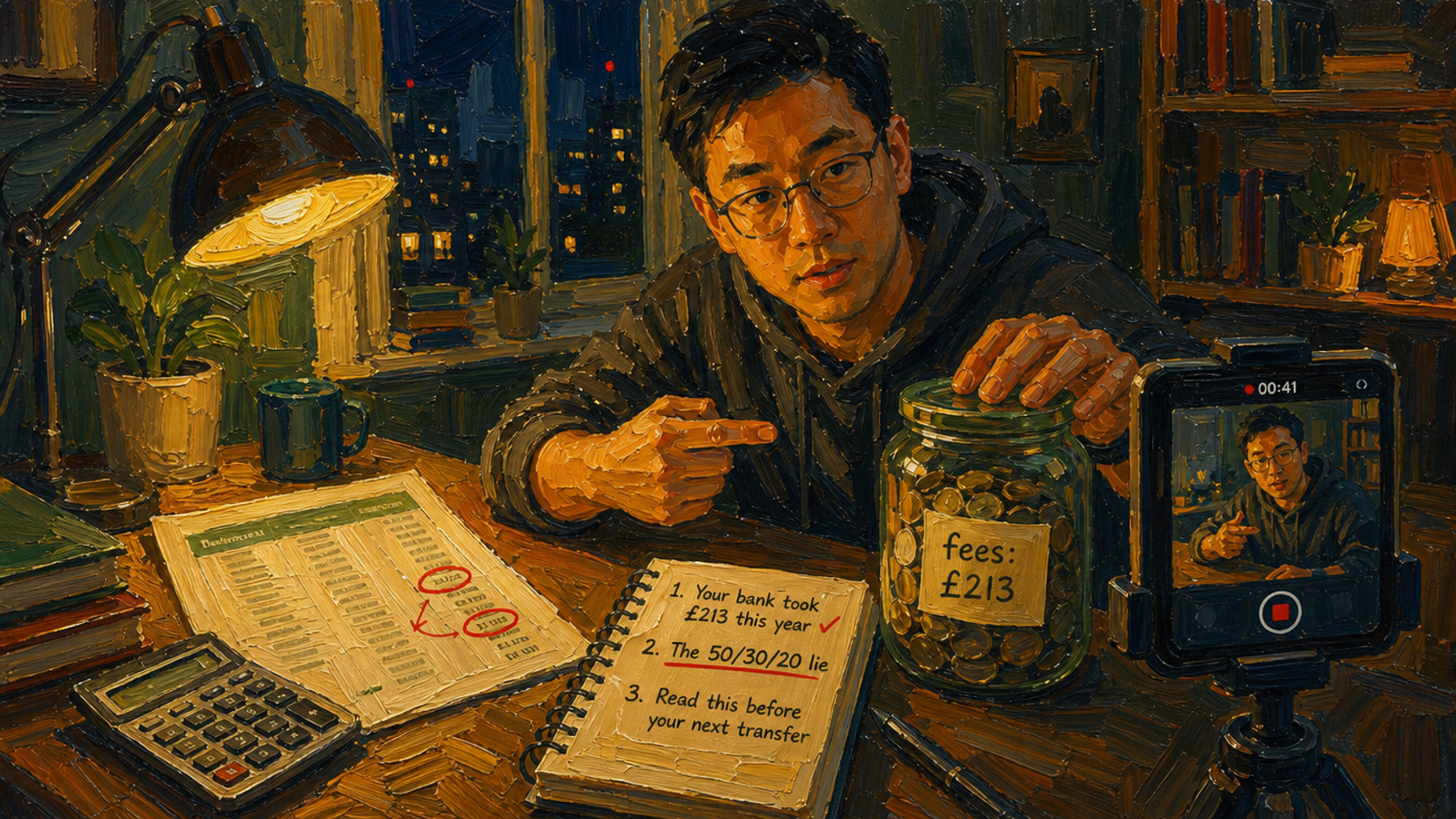
The savings-challenge hook leads FinTok in 2026. Across the highest-engagement posts Draper pulled from personal finance creators in the 10K–500K follower band, "save with me" challenges and contrarian one-liners outperform straight advice. @thebudgetingprincess's "Save $25,000 with me 🏡" drew 2.0M views and 63.9K likes — the highest-viewed in-band post in the sample. The hook isn't the tip; it's the shared journey. Inviting viewers to do something with you beats telling them what to do.
What does the data show?
Six hook types emerge. Ranked by the share of viewers who liked rather than by reach, the biggest post in the set is a mid-table performer.
- Personal milestone reveal8.7%
@indiadarcey — 19.5K likes on 223.8K views. Caption: "How I saved £8k in 5 months at 18".
- If I were starting over5.9%
@calltoleap — 13.5K likes on 229.7K views. Caption: "If I were 40 and starting over, these are 5 things I'd never do with my money".
- Expert referral4.4%
@hermoneymastery — 15.8K likes on 356.5K views. Caption: "How I paid off all my debt and saved my first $10k".
- Numbered list4.1%
@calltoleap — 13.5K likes on 325.9K views. Caption: "5 things I would never do with my money".
- Savings challenge3.2%
@thebudgetingprincess — 63.9K likes on 2.0M views, by far the largest reach in the set.
- Contrarian rule3.2%
@daveramsey — 26.2K likes on 823.1K views. This account sits far above the 10K–500K band.
Calculated from the like and view counts of the top post in each category. The savings challenge reached six times more people than anything else here and converted them at the second-lowest rate — a reminder that these two numbers answer different questions.
The savings challenge wins on reach by attaching a dollar figure to a concrete life goal — the house emoji in @thebudgetingprincess's caption ties the number to a deposit, which separates it from generic savings content. What it does not do is convert unusually well, and that is fine: a challenge post is an invitation to follow, and following is not a tap.
The personal milestone reveal wins on intensity. @indiadarcey's £8k post converted 8.7% of everyone who saw it, roughly double the rest of the sample. A specific number, a specific timeframe and a specific age make the claim checkable, and checkable claims get a response.
The contrarian rule reaches widely. @daveramsey's "Payments will keep you broke" took 823.1K views, and a second post in the same style — "Most people are broke. They spend more than they have coming in." — reached 2.6M views and 100.9K likes. Read the structure rather than the numbers: that account sits far above the band this analysis covers, and a blunt declarative from a household name is not the same instrument as a blunt declarative from a 40K-follower creator.
This sample has no comment counts in it
What should marketers do with this?
Brief creators on the savings-challenge hook when the goal is reach and a returning audience. The construction is replicable: the caption opens with "Save $[X] with me" plus a goal emoji, the on-screen text shows a running total (cash envelope, app balance, tracker spreadsheet), and milestone posts carry a "PAID OFF" celebration frame. The real mechanism is not algorithmic — it is that a challenge has episodes. Viewers come back to see whether you hit the number, which is a reason to follow rather than a reason to like.
Brief the milestone reveal when the goal is response. It reached a tenth as many people and converted more than twice as hard. The rule that makes it work is specificity: a number, a timeframe and a starting point. "How I saved £8k in 5 months at 18" is a claim someone can test against their own life in about two seconds, which is exactly what makes them react to it.
Use the contrarian rule with clear eyes about who it works for. A blunt under-ten-word declarative delivered face-to-camera on frame one, with no intro, is a sound structure. But the two examples here come from an account with a national profile, where the audience already knows who is talking and has an opinion about him. A small creator posting the same sentence is making a much bigger ask of a stranger.
What's the emerging signal in this data?
@calltoleap ran three near-identical versions of the same claim, which makes this the closest thing to a controlled test in the dataset — same creator, same audience, same underlying advice, one variable in the caption.
- No age anchor325.9K
"5 things I would never do with my money" — the best performer of the three.
- "If I were 40 and starting over"229.7K
Nearly four times the age-18 version, and still short of using no age at all.
- "If I were 18"60.3K
The same advice, anchored to an age most of the audience has already passed.
The age anchor is not free. Naming 40 rather than 18 is worth roughly four times the views — but naming no age at all beat both, because every age you name is an audience you have quietly excluded.
The usual version of this finding stops one step early and concludes that older age anchors win. They do, against younger ones. But the variant with no age anchor at all out-performed the age-40 version by another 40%, and that is the more useful lesson: an age in the hook is a filter, and a filter costs you everyone on the other side of it.
The reason the 40 version beats the 18 version is worth keeping, because it says something real about the audience. "Starting over" speaks to people who feel behind, and that is a much larger and more emotionally activated group than people who are genuinely starting out. If you are going to name an age, name one that lets the people who feel late include themselves. If you do not need to name one, do not.
Frequently asked questions
- What hooks work best for personal finance creators on TikTok in 2026?
- Six hook types recur in Draper's sample: savings challenge, contrarian rule, personal milestone reveal, numbered list, if-I-were-starting-over, and expert referral. The savings challenge leads on reach — @thebudgetingprincess's 'Save $25,000 with me' hit 2.0M views, the highest of any in-band post in the dataset.
- What is the highest-engagement FinTok hook format in 2026?
- It depends on the measure. By raw views, the savings challenge: @thebudgetingprincess's 'Save $25,000 with me' reached 2.0M views and 63.9K likes. By like-to-view ratio, the personal milestone reveal: @indiadarcey's 'How I saved £8k in 5 months at 18' converted 8.7% of the people who saw it, roughly double the rest of the sample.
- Does the contrarian hook work for finance TikToks?
- It reaches widely. @daveramsey's 'Payments will keep you broke' took 823.1K views, and a second post in the same style reached 2.6M. Two caveats: Ramsey's account sits far above the 10K–500K band this analysis covers, so read the structure rather than the numbers, and the sample contains no comment counts — so any claim that the format wins on comments is not something this data can support.
- Should FinTok creators anchor a hook to an age?
- Only carefully. @calltoleap ran three near-identical versions of the same claim: no age anchor took 325.9K views, 'if I were 40 and starting over' took 229.7K, and the age-18 version took 60.3K. So an older anchor beats a younger one by nearly four times, but the version with no age at all beat both. An age narrows your audience; make sure you are narrowing it towards the bigger group.
- Why does the savings-challenge hook work so well on TikTok?
- It replaces instruction with participation. 'Save $25,000 with me' invites the viewer into an ongoing effort rather than telling them what to do, and the running-total device gives them a reason to come back for the next post. The dollar figure attached to a concrete goal — a house deposit, in @thebudgetingprincess's case — is what separates it from generic savings content.
Related

How long should TikTok videos be to maximise views in 2026?
Two to five minutes averages the highest views of any length band. But the benchmark is ageing, and the best length scales with how big your account already is.

What hooks are top fitness creators using on TikTok in 2026?
Three hook types lead fitness TikTok in 2026: constraint framing, mistake correction and identity shifts. The top post, at 14.6M views, teaches no fitness.
What TikTok hooks are working for fashion creators in 2026?
Story beats style on fashion TikTok in 2026. Narrative GRWM hooks outperform trend lists and tutorials: the situation is the hook, the outfit comes second.