
Go-to-market strategy template for a physical product

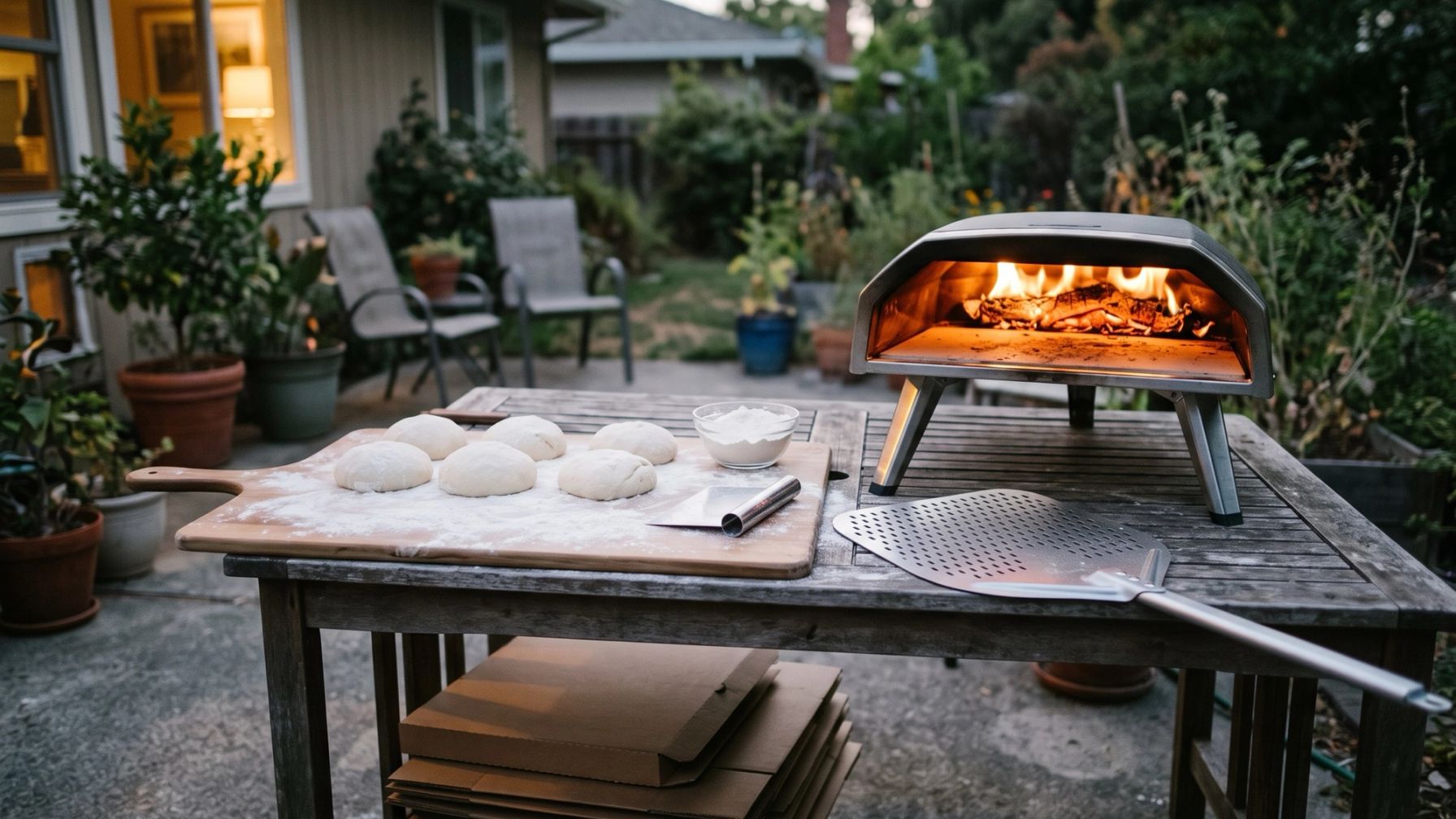
A go-to-market strategy template is a one-page plan for how a new product reaches its first buyers: who they are, what you tell them, the price, and which channels bring in how many sales by when. For a small physical brand, fill it in backward from one number, the pre-orders that pay for your first factory order.
Most templates online are written for software teams, with fields for personas, competitors and launch phases and no numbers linking one field to the next. This guide is for a founder selling a physical product online with pre-orders, a small ad budget and a few hours a week. It is the last step of testing demand before you build and assumes you have a factory quote and a price.
What a go-to-market plan covers for a physical product
The plan records who buys first, what you say to them, the price and terms, the channels, and the money and hours each channel gets. A software launch can run for months, because an extra sale costs almost nothing to deliver. A physical product has a production run to pay for, so its plan needs an end date and a target: enough full-price pre-orders to cover the order and what you spent winning them. From the target you can work out how many pre-orders the ad budget has to buy, how many must come from people you reach yourself, and whether your hours can get them.
Go-to-market strategy template
Copy the left column and fill it in. The right column is the worked example below, and the first three lines come from earlier work: your first group of buyers, your value proposition and your price.
| Line | Worked example (invented) |
|---|---|
| Product, price, first order | Perforated pizza peel, $60. 300 units, $4,500 landed |
| First buyers | US owners of home pizza ovens who bake most weeks |
| The one sentence you tell them | Spare flour falls through the holes, so less of it burns under the pizza |
| Pre-order terms | Full price, a ship-by date with slack in it, full refund if the order doesn't go ahead |
| Pre-order target | 149 by the closing date |
| Ad budget and platform | $2,000 on Instagram and Facebook |
| Unpaid channels | Network and waitlist 35, online groups 25, creator gifts 15 |
| Hours a week | 8 |
| Window and checkpoint | Six weeks. The first two are a test, reviewed at the end of week 2 |
| Go and stop lines | Ads at $27 a pre-order or less: go. $31 or more: stop. Short at the close: refund everyone |
A worked example: a pizza peel launch on $2,000
The numbers are invented and round. A founder sells a perforated aluminum pizza peel for home pizza ovens at $60. Her first order is 300 units at $15 each landed, $4,500 in all. Each sale costs her $14 in payment fees, the box, postage and an allowance for returns, which leaves $46.
She has $2,000 for ads, eight spare pre-production samples and eight hours a week alongside her job. Pre-orders stay open for six weeks, and the first two run as a demand test.
1. Set one pre-order target from your break-even
Add the landed cost of the first order to everything you plan to spend winning customers during the window. Divide by what one sale leaves after selling costs, and round up.
For the founder: ($4,500 + $2,000 in ads + $320 in samples and postage) ÷ $46 = 148.3, so 149 pre-orders. At 149 the order and all the marketing are paid back.
This is the sum from the pre-orders guide, with the ad money entered as a fixed amount instead of a cost per customer. Count only full-price pre-orders, from every channel. Sign-ups and followers don't count.
2. Work out how many pre-orders the ads can buy
Plan with an estimated cost per pre-order from ads until a test gives you a real one. The founder uses $25.
If ads had to bring in every pre-order, the break-even would be $4,500 ÷ ($46 − $25) = 214.3, so 215 pre-orders and $5,375 of ads, well over her budget. Her $2,000 buys about 80. The other 69 have to come from channels that cost her time instead of money.
If your hours can't plausibly close that gap, change something before the window opens: a smaller first order, more ad money or a cheaper version of the product.
Work out your ceiling too: the price minus selling costs minus the landed unit. Hers is $60 − $14 − $15 = $31. An ad pre-order that costs $31 only pays back its own unit and leaves nothing toward the rest of the order, so $31 or more is her stop line. Running ads on a small budget covers the setup.
3. Estimate what each unpaid channel can bring
Start with the people closest to you and work outward. Each person further out knows less about you and is being asked to pay now for something that arrives months later.
- People who know you, and anyone who joined a waitlist. The founder has about 40 friends, relatives and former colleagues who own an oven or know someone who does, and 110 people on a waitlist from her customer interviews. She plans on 35 pre-orders.
- Online groups where buyers already talk. She found two Facebook groups for owners of popular home ovens and a pizza subreddit. Read each group's rules before you mention the product. She plans on 25 over six weeks.
- Free samples to small creators who bake in home ovens. She can gift eight, at $40 each with postage. In the US, the FTC says a creator who mentions a free product should disclose it in the post itself. She plans on 15. Product seeding covers choosing and pitching creators.
That is 75 unpaid and 155 in all, six over the target. Nobody publishes how often a Facebook group member pre-orders, so write next to each figure what it rests on, such as the 40 names she can list. If the total is short of the gap, go back to the changes at the end of step 2.
The unpaid estimate also moves the go line for the ad test. The pre-orders guide sets the go line at the highest cost per ad pre-order at which the ad money can still reach the break-even. Here the unpaid channels are expected to bring 75 of the 149, so the ads only need to bring 74, and her go line is $2,000 ÷ 74 = $27.03 a pre-order, still below the $31 stop line.
Draper's Plan Your Go-to-Market workshop builds this plan from your own quote, price and hours, including the groups and creators to approach.
4. Give each channel its hours
| Channel | Hours a week | Pre-orders | Cost |
|---|---|---|---|
| Ads | 1 | 80 | $2,000 |
| Instagram profile | 3 | In the ads' 80 | $0 |
| Network, waitlist | 2 | 35 | $0 |
| Online groups | 1.5 | 25 | $0 |
| Creator gifts | 0.5 | 15 | $320 |
| Total | 8 | 155 | $2,320 |
The profile gets the most hours because it supplies the photos and videos the ads use, and it is what people find when they look the brand up. Post twice a week on the platform your ads run on, and use the posts people respond to as material for the next ads. The ads hour covers checking that they're spending and that a test order still goes through.
5. Lay out the window week by week
Start three weeks early. Creators need the sample in hand before they post, and the profile needs posts on it before the first ad runs.
| Week | Ads | Your hours |
|---|---|---|
| 3 before | None | Pitch eight creators. Join the groups and answer questions |
| 2 before | None | Send the samples. Post product photos |
| 1 before | None | Draft messages, tag a link per channel, place a test order |
| 1 | Test starts, about $36 a day | Message your network and waitlist on day 1 |
| 2 | Left alone | Follow up. Read the result at the end of the week |
| 3 to 5 | About $54 a day unless the test said stop | Move hours toward what's working |
| 6 | Same | Last-call message three days before the close |
6. Count pre-orders by channel and move hours at the checkpoint
Give every channel its own tagged link. Google's guide to campaign URLs recommends three tags on each: source, medium and campaign. Ask "Where did you hear about us?" at checkout to catch people who type your address in, and compare each channel's count with the plan every week.
At the end of week 2, the founder had 17 pre-orders from $500 of ads, $29.41 each, above her $27.03 go line and below the $31 stop line. At that cost the remaining $1,500 buys about 51 more, 68 from ads in all. The target is still 149, because the spend hasn't changed, so the unpaid channels now need 81, six more than she planned. In the pre-orders guide, a result between the lines means changing one thing and testing again. Six extra pre-orders is a gap her hours can try to close, so she leaves the ads as they are and makes her one change on the unpaid side.
So far, people she knows had brought 22 pre-orders from four hours of messages, and the online groups 4 from three hours. Creators had brought 2, with most of their posts still to come. Her network was bringing a pre-order for about every 11 minutes of her time, the groups one for every 45, so she moved one group hour to asking each friend who had pre-ordered to pass the page to one person they know with an oven.
Launches that need a different plan
- If you sell from stock, as with a white-label product, you don't need a pre-order window. Set the target as the units to sell in a fixed period, and split it across channels the same way.
- If you sell to shops, your channels are store buyers and trade shows, and the target counts stockists and their opening orders.
- If you have no ad budget, every pre-order must come from unpaid channels. When your network and online groups can't plausibly bring it, start with a smaller first order.
- If people already search for the kind of product you make, search ads may suit it better than feed ads. The target and the sums work the same way.
Related questions
How large the first order should be is covered in What is MOQ?. Ship dates, refunds and what to do with each test result are in how to take pre-orders.
Frequently asked questions
- What should a go-to-market plan include?
- Who you sell to first, what you tell them in one sentence, the price and terms, the channels you will use, and the money and hours each channel gets. For a physical product it also needs a sales target and a deadline, because the first production run has to be paid for, and the target sets how much the ads and your hours each have to bring in.
- What is the difference between a go-to-market strategy and a marketing plan?
- A go-to-market strategy covers one launch: a product, a first group of buyers and a set period, with a target to reach. A marketing plan usually covers the whole business over a year or more, across every product and channel. A small brand's first marketing plan often starts as its go-to-market plan and grows from there.
- What are the phases of a go-to-market strategy?
- Most plans have three: the weeks before launch, the launch window and what follows. For a pre-order launch, the weeks before are for gifting samples, filling your social profile and writing messages. The window is when pre-orders are open. After it closes, you place the factory order or refund everyone.
- How do you measure go-to-market success?
- Against the target you set before launch. For a pre-order launch, that is full-price pre-orders by the closing date, counted by source so you know which channel brought each one. Also track what each pre-order cost from ads and how much of your time each unpaid pre-order took, channel by channel. Followers, likes and sign-ups don't count toward the target.
- How do you launch a product on a small budget?
- Spend the money where it buys orders from strangers, usually one ad platform, and put your time into the channels that cost nothing: people you know, communities where your buyers already talk, and free samples to small creators. Set one sales target first, then check that the ads and your hours can plausibly reach it together.
Related
How to do pre-orders before you manufacture a product
How to do pre-orders for a product you haven't made: set a ship date you can meet, choose when to charge, follow the FTC rule and test demand first.

Influencer gifting: how to send your first product gifts
Influencer gifting (product seeding) means sending free product to creators. Who to pick, how to pitch, the FTC rules, and how to track pre-orders.

How do I run ads to test a business idea?
An ad test asks three questions in turn: can you reach your market, do they respond to your pitch, will they leave an email? It answers no far better than yes.
