
Value proposition examples and how to write your own

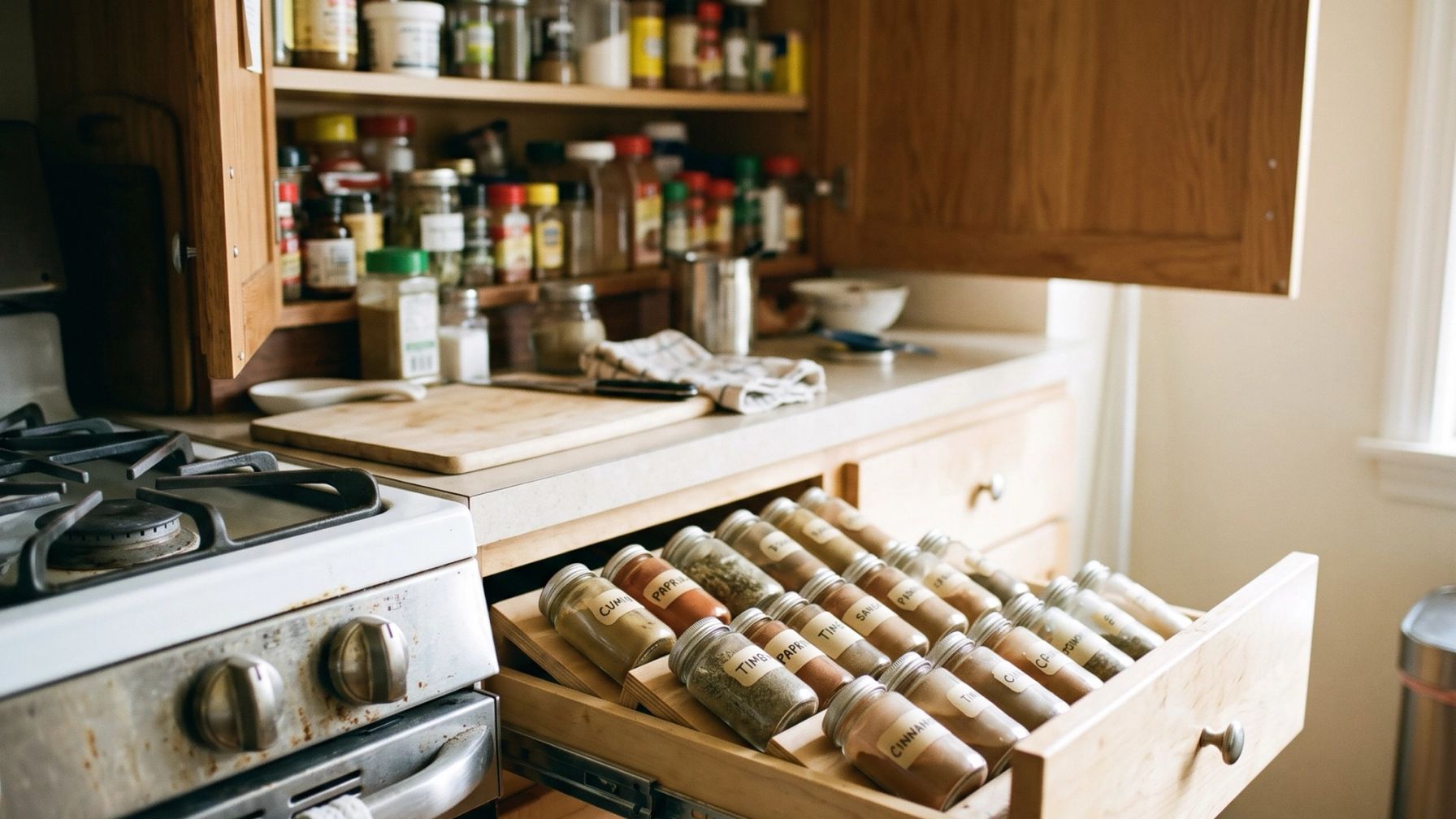
A value proposition is a sentence or two telling a buyer why to choose your product over what they do now: what the product is, who it suits and what will be different for them. Good value proposition examples are specific enough that the buyer's current habit or product couldn't honestly make the same claim.
The method below is for a small brand with a physical product, sold online with pre-orders before the first production run. It works best once you've talked to some customers, because the words you need come from them. If you haven't yet, the Mom Test covers how to run those conversations without leading people.
What a value proposition statement includes
Most definitions agree on four elements: who the buyer is, the product named the way they'd name it, what improves for them, and the option it replaces. Geoffrey Moore's fill-in positioning statement in Crossing the Chasm, first published in 1991, asks for much the same: the target customer, the current alternative they're unhappy with, the product category, the reason to buy, and how you differ from the alternative (Unusual Ventures reproduces it). Strategyzer's Value Proposition Canvas, from the book Value Proposition Design (2014), is a worksheet for the thinking behind it: the customer's jobs, pains and gains on one side, and what your product does about each on the other.
For a small brand the finished sentence does most of its work in three places: the top of the product page, the ads, and the box. A tagline such as Nike's "Just Do It" can get away with saying nothing about the product, because everyone already knows what Nike sells. A new brand has to tell a stranger what the thing is.
Value proposition examples from small product brands
Most lists of value proposition examples lean on software and household names such as Shopify and Mailchimp. The brands below are smaller companies that sell physical products. Each line was copied from the brand's own homepage in October 2026. Homepages change, so check a line before you quote it.
| Brand | Line on the homepage | Why it works |
|---|---|---|
| [Lomi](https://lomi.com) (countertop food recycler) | "You deserve better than smelly, leaking trash." Below it: "Cut your food waste volume by 80%." | Starts from what people put up with today, then puts a number on the change |
| [Stasher](https://www.stasherbag.com) (silicone storage bags) | "From meal prep to travel day, Stasher's reusable silicone products replace single-use plastic across your entire routine." | Says what it is and what it replaces in one sentence |
| [Ruggable](https://ruggable.com) (washable rugs) | Page heading "Washable Rugs". The description search engines show adds "Great for homes with kids and pets." | Uses the name of the category as its heading, then says which homes it suits |
| [Loftie](https://loftie.com) (bedside alarm clock) | "Ditch your phone & rediscover what great sleep feels like." | Sells against a habit, the phone on the nightstand, rather than another clock |
| [Ugmonk](https://ugmonk.com) (paper planning cards) | "Analog is a paper card system for capturing ideas, clearing your head, and focusing on what matters most." | The headline ("Clear Your Head. Own Your Day.") is a tagline; this line further down says what the product is |
Three of the five set the product against something the buyer already does (the kitchen trash, single-use bags, the phone in bed), and none names a rival brand. A first product is more often up against a routine like these than against another company.
How to write a value proposition: a worked example
This example and its numbers are invented. A founder plans a spice drawer organizer, an angled insert that holds jars on their side in a kitchen drawer, priced at $32. The first customers are people who cook most nights and keep their spices in a cupboard. Their first attempt at a value proposition was "The smarter way to organize your spices."
1. Collect the phrases customers used
Go back through your conversation notes and copy out every phrase about the problem, word for word. Sort them into three lists: what goes wrong and when, what people do about it now, and what they'd count as fixed. Count how many people said something like each one.
The founder had talked to nine cooks who fit the group. Seven kept their spices in a cupboard, with the jars two or three rows deep, and two used a rack on the counter. The phrases that came up most were "I have to take everything out to find the paprika" and "I've got three jars of cumin." Five of the nine had bought a spice in the past year that they already had at home. That count matters more than the complaints about mess, because it is money the cooks are already losing.
2. Name what they do now, and where it fails them
Write down the alternative your customers rely on most. For small products it is often something people already own or already do, as in the table above. The product differentiation method covers how to find it and read what its users complain about.
Then hold your draft line up against it and ask whether the alternative could make the same claim. "The smarter way to organize your spices" fails, because for most of these cooks a tidy cupboard shelf already is their system, and the line doesn't say what would change. Where the cupboard lets them down is the back rows: jars there are hidden, so people can't see what they own. A drawer insert shows every jar at once, right next to the stove.
3. Pick the word people would search for
Call the product what buyers type into Google or Amazon. That word decides which products yours is listed next to and compared with, and what price people expect. A name you invented, such as "spice dock", tells a buyer nothing and isn't something anyone searches for.
The cooks mostly said "spice rack". When the founder searched it on Google and Amazon, the results were wall racks and countertop stands. "Spice drawer organizer" brought up drawer inserts like theirs, so that became the product's name in every line.
4. Write one plain sentence, then cut what you can't prove
Put the four parts into one sentence, in whatever order reads naturally, using the customers' own words for what improves. Expect it to be clumsy at first.
The founder's draft read: "A spice organizer for home cooks that ends digging through the cupboard, so you never buy a duplicate again." "Spice organizer" was too loose, and "never buy a duplicate" was a promise they couldn't test. The second draft read: "A spice drawer organizer for cooks who keep their spices in a cupboard. It holds 24 jars label-up in the drawer by the stove, so you can see what you have before you shop."
The 24 came from the founder's own test. They filled the prototype with the jars the nine cooks bought most often, from two supermarket brands, and 24 fit with every label readable from above. Taller jars from a third brand fit only 18, so the product page says which jars it was tested with. In the US, the FTC's advertising guide for small businesses says advertisers must have proof for a claim before the ad runs, and that claims online must be truthful and backed up too.
Keep the proof for every number
Draper's Write Your Value Prop workshop drafts this sentence from your earlier customer research and competitor work, if you'd rather start from a draft.
5. Read it to people in your group
People who haven't seen the product have only the words to go on, and you can't hear the sentence that way yourself. Read it to five or six people who fit your group and haven't heard about the product, then ask what it is, who it's for and why someone would buy it. Write down what they say before you explain anything.
The founder read both lines to six cooks. For "The smarter way to organize your spices", two described a wall rack, three a turntable for the cupboard, and one guessed a labeling app. For the new line, all six described an insert for a kitchen drawer, and four mentioned seeing all the labels at once. Two asked whether it would fit their drawer. The founder had only tried it in drawers at least 15 inches wide, so the product page gives that width and the ad doesn't claim to fit every drawer.
6. Test it in an ad before it goes on the box
People understanding the line doesn't mean they'll pay. Make it the headline of a pre-order page, use the same words in an ad, and run the ad on a small budget. It's the pre-order test you'd use to check demand before you build, with the headline as the variable. Run one line at a time to the same audience, so each result belongs to one line.
Decide the pass mark first: the most you can pay to win one pre-order and still make money. The organizer sells for $32 and costs $12 landed, which leaves $20 a unit, so the founder set the pass mark at $16 a pre-order to leave room for payment fees.
They ran each line for a week at $180, to the same audience the beachhead market work had chosen:
- "The smarter way to organize your spices": 600 visits, 5 pre-orders (0.8%), $36 a pre-order.
- "Every spice label in one drawer. Holds 24 jars.": 600 visits, 16 pre-orders (2.7%), $11.25 a pre-order.
The specific line came in under the $16 pass mark and the vague one cost more than twice it. With 600 visits per line, only a gap this large means much; a difference of one or two pre-orders could be chance.
Put the line on packaging after it has passed. Boxes are printed in bulk for the production run, so a line that changes afterward means paying to print them again.
Before the line goes on the box
Gifts, white-label products and multi-product shops
- Gifts and impulse buys rarely start from a problem, so customers won't give you phrases about one. Lead with the occasion and the person the gift is for, and lean on the ad test more than the conversations.
- If you sell a white-label product that other sellers also stock, the product can't carry the difference. The value proposition has to come from who you sell to and what you add around the product.
- A shop selling many products needs a value proposition for the shop, about who it serves and why they'd buy there. Write product lines afterward.
Related questions
Once you have the line, it opens your pitch: how to write a business one-pager shows where it goes. For the pre-order page that carries the test, see how to take pre-orders before you manufacture.
Frequently asked questions
- What is a good example of a value proposition?
- Lomi, which makes a countertop food recycler, opens its homepage with "You deserve better than smelly, leaking trash" and follows it with a claim that it cuts food waste volume by 80%. It starts from something buyers put up with today, in the words they'd use about it, and puts a number on the change. A small brand can do the same: say what the product is, who it suits, what changes for them and what it replaces.
- How long should a value proposition be?
- One or two sentences that you can say out loud comfortably. The full statement can run to about 40 words. On a homepage or in an ad it is usually split into a short headline and a sentence underneath that carries the detail.
- What is the difference between a value proposition and a tagline?
- A value proposition tells a stranger what the product is, who it suits and why they'd buy it. A tagline is a short brand line that often makes sense only once you already know the product. Ugmonk's homepage headline, "Clear Your Head. Own Your Day.", is a tagline. The sentence further down, which calls its product a paper card system for capturing ideas, is the value proposition.
- What is the difference between a value proposition and a USP?
- A unique selling proposition is the one thing only you offer. A value proposition is the whole case for buying: what the product is, which buyers it suits, how their life changes and what it replaces. The USP usually sits inside the value proposition as the reason to switch.
- What should a value proposition statement include?
- Four things: the product, named the way buyers already name it; the buyers it suits, such as cooks who keep their spices in a cupboard; what improves for them, in words they used themselves; and the habit or product it replaces. Add a number only when you have a test or source behind it.
Related
Product differentiation: find the gap competitors leave
Product differentiation is why a customer picks you over what they use now. A method for small founders to find the gap competitors leave, with examples.


The Mom Test: how to talk to customers and read the answers
The Mom Test is a way to interview customers so their politeness can't mislead you. How to find people, run the conversation and read what they tell you.
How do I run ads to test a business idea?
An ad test asks three questions in turn: can you reach your market, do they respond to your pitch, will they leave an email? It answers no far better than yes.
