
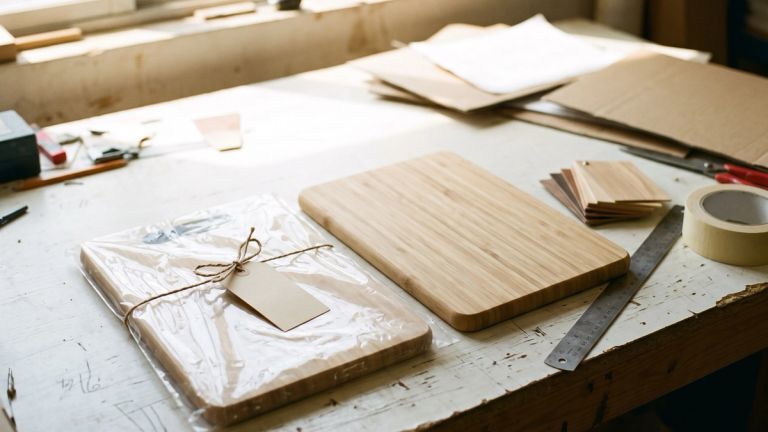
Golden sample: what to check before mass production
A golden sample is the approved sample a factory's production must match. What to check, how to record approval, and how it sets the final inspection.

Every Draper article on Product.
A golden sample is the approved sample a factory's production must match. What to check, how to record approval, and how it sets the final inspection.

An NNN agreement stops a Chinese factory using, sharing or selling around your design. What makes one enforceable in China, and when to send it.
Value proposition examples from small product brands, checked live, and a way to write yours from customer words, the alternatives and a small ad test.

A product specification sheet tells a factory what to make and how it will be checked. What to put in one, with a worked example and a note on tech packs.

Minimum viable product examples from physical brands, prototype vs MVP, and how to cut a long feature list down to a first product a factory can make.
Landed cost is what one unit costs once it reaches your door. Work it out line by line, find your break-even point and see when the cash leaves.
White label vs private label vs fully custom: what each means, how they differ on MOQ, cost and lead time, and how to choose the level your product needs.
A feasibility study checks whether an idea can work before you spend on it. A one-week version for one physical product, with a full worked example.
An RFQ (request for quotation) asks suppliers to price the same product on the same terms. What to send a factory, an email template, and how to compare quotes.
Product differentiation is why a customer picks you over what they use now. A method for small founders to find the gap competitors leave, with examples.
How to price a product: cost-plus, keystone and value-based pricing compared, then a worked example that checks the price against ad costs and your first order.
MOQ (minimum order quantity) is the smallest order a supplier will accept. What it means, why it exists, and how to size and negotiate your first order.
Most suppliers on the big sourcing sites are middlemen, not factories, whatever the listing says. How to tell them apart, and why the first quote isn't final.


Start with the brand, not the product. Set the invariants it must hit, then use AI for the images, video and 3D that make it real enough to test.

From $0 with Blender to $4,716 a year for SOLIDWORKS Premium, with AI tools between $10 and $120 a month and professional renders at $100 to $300 an image.

Image, video and 3D. Images come first because the rest are built from them, video works best in ads, and 3D pays off for prototypes and websites.
A good coach with real domain experience beats software. The problem is cost and variance — you pay for months before you can tell which coach you hired.


ChatGPT and Claude are generalist models that answer what you ask. Draper is a start-a-business app that holds the path and pushes the next right step.

A start-a-business app takes one person from an idea to a running business, doing the work of product, marketing, legal and finance rather than advising on it.
Draper is a start-a-business app: one AI mentor coordinating product, marketing, legal and finance departments that unlock in stages as your business moves.