Minimum viable product examples for physical products

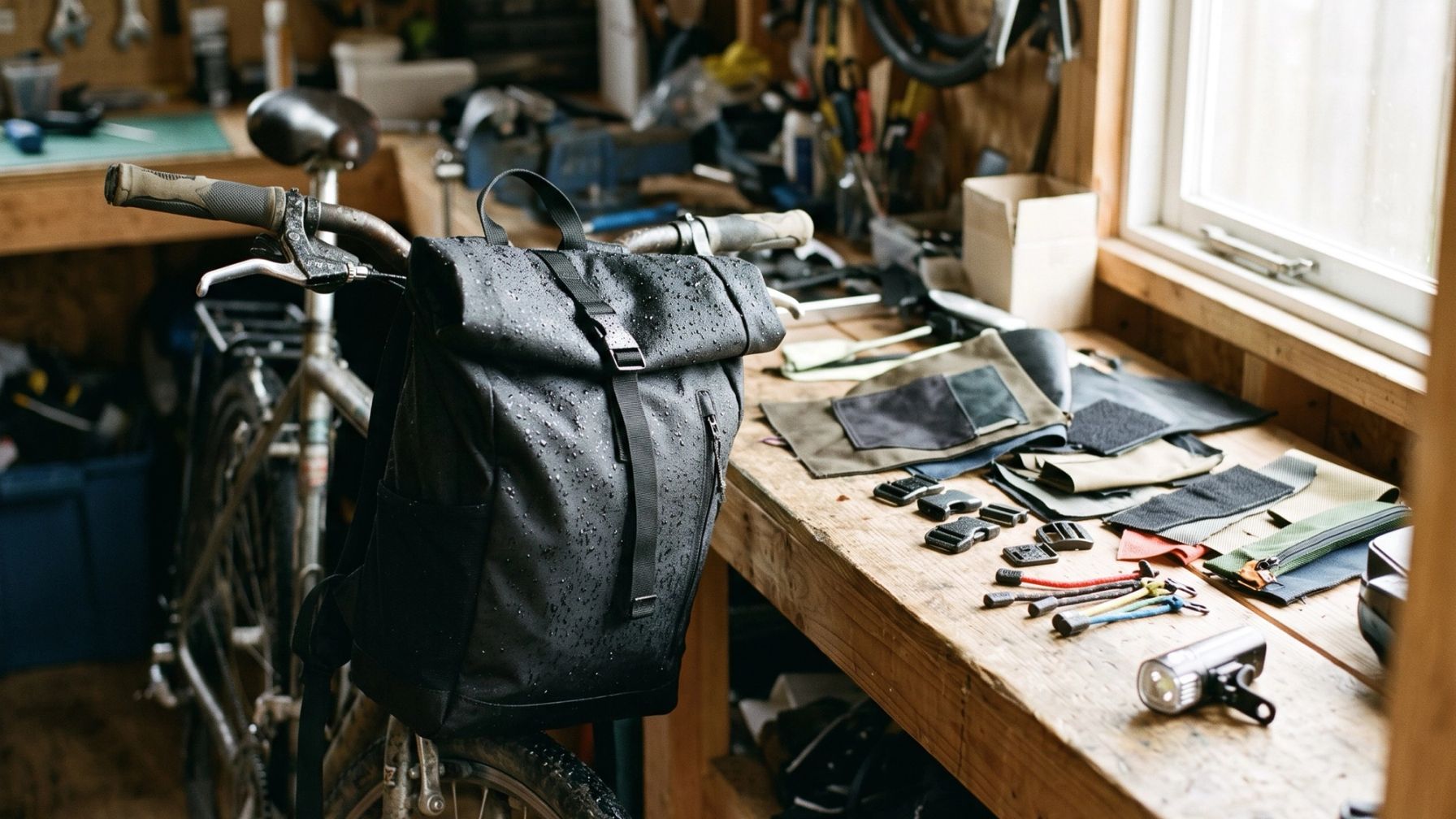
A minimum viable product (MVP) is the simplest version of a product customers will pay for. For a physical product, that usually means one design in one size and color, made from stock materials at the factory's lowest order quantity.
The term is usually credited to Frank Robinson, co-founder of the product development firm SyncDev, which says it first used it in 2001. Eric Ries made it widely known, first on his blog and then in his 2011 book The Lean Startup. He defines an MVP as the version that teaches you the most about customers for the least effort.
Most lists of MVP examples are software: Dropbox's demo video, Airbnb's first website. A software team can change its product next week. A physical product is fixed once the factory runs it, and each feature can add a mold, a material bought in bulk, or another color with its own minimum order. This guide assumes you sell a physical product online and take pre-orders before the factory makes it.
Minimum viable product examples from physical brands
Zappos started in 1999, when Nick Swinmurn wanted to sell shoes online. He went to Footwear Etc. in Sunnyvale, California, and offered to photograph its shoes, put them online and, if people bought them, buy them from the store at full price, he told Fortune. Investors had told him nobody would buy shoes without trying them on first. The store deal let him find out without buying any stock, because he paid for a pair only after a customer ordered it.
Casper launched in April 2014 with a single mattress. Instead of a range of firmness levels, it sold one design in six standard sizes, from $500 for a twin to $950 for a king, Entrepreneur reported. A mattress has to fit the bed, so the sizes had to stay, but each firmness level would have been another mattress to develop and stock.
Peak Design started with one small part, a clip for carrying a camera. Peter Dering came up with it while traveling with his camera strapped to his backpack with a carabiner. He launched it on Kickstarter in May 2011 with a $10,000 goal and raised $360,000, TechCrunch reported. The bags came later, from its fifth Kickstarter campaign onward: the Everyday Messenger, then the Everyday Backpack in 2016.
Prototype vs MVP: what each one is for
| Prototype | MVP | |
|---|---|---|
| Question it answers | Can it be made, and does it work? | Will people pay for it? |
| Who sees it | You, a few testers, the factory | Paying customers |
| How it's made | By hand, 3D printed, or a bought product you've modified | By the factory, the way production will make it |
| How many | One to a handful | The factory's minimum order |
| Sold? | No | Yes |
Most physical products go through several prototypes before the MVP. The factory's pre-production sample sits between the two: it is made the way the MVP will be, and you approve it before the run.
A worked example: a commuter backpack
The numbers below are invented and round. A founder plans a waterproof backpack for people who cycle to work, priced at $120. She has spoken to 20 cyclists, and her notebook holds a long list of features: a waterproof roll-top, a padded sleeve for a 16-inch laptop, reflective strips, a bottle pocket, a shoe compartment, a built-in rear light with USB charging, a magnetic buckle, logo zipper pulls, recycled fabric, a removable hip belt, three sizes, four colors and a gift box.
1. Write down every feature you have in mind
Put everything on one list, including colors, sizes, materials and packaging. Those are easy to leave off, but at the factory each one changes the order. Three of the backpack's 13 items (sizes, colors, packaging) would never appear on a sketch.
2. Mark the features buyers asked for
Go back to your customer conversations and to the one- and two-star reviews of the products people use now. Mark every feature a buyer raised before you mentioned it. Those are the reason to buy, and they stay in the first version. The product differentiation guide shows how to find them in reviews.
In the example, 17 of the 20 cyclists had arrived at work with a wet laptop, and 12 worried about being seen at night. Five wanted somewhere to put shoes. Nobody asked for a light, a magnetic buckle or recycled fabric. Those came from the founder.
3. Price each feature in factory terms
For every feature nobody asked for, ask what it does to the order. Does it need a custom mold? A material the factory has to buy in bulk? A second supplier? Does it create another version of the product with its own minimum?
| Feature | What it adds at the factory | First version |
|---|---|---|
| Waterproof roll-top | The factory's stock waterproof fabric | Keep |
| Laptop sleeve | Foam and lining, no tooling | Keep |
| Reflective strips | Stock reflective tape | Keep |
| Bottle pocket | Already in the factory's base pattern | Keep |
| Shoe compartment | Extra panels, a zipper, more sewing time | Later |
| Rear light, USB charging | A second supplier, a battery, electronics to test | Later |
| Magnetic buckle | A custom mold, $3,000 | Stock buckle |
| Logo zipper pulls | A custom mold, $1,000 | Stock pulls |
| Recycled fabric | A separate material minimum | Later |
| Removable hip belt | Extra parts and sewing | Later |
| Three sizes | Each size is its own version | One size |
| Four colors | Each color is its own version | Black only |
| Gift box | A printed packaging minimum | Plain mailer |
The shoe compartment is the hard call, because five people asked for it. It stays out because it adds cost to every unit for a quarter of buyers. It goes on the list for the second order, to add if early customers ask for it too.
4. Cut to one size and one color
Factories usually set the minimum order per version, so sizes and colors multiply the first order fastest. Choose the size most buyers need and the color the factory already stocks.
In the example the factory's minimum is 200 units per version and 300 units per order:
- Full list: 3 sizes × 4 colors = 12 versions × 200 = 2,400 units. The factory quotes $38 for the bag with every feature, so 2,400 × $38 = $91,200, plus $4,000 for the two molds. That is $95,200 and about 14 weeks before the first bag ships.
- First version: one 24-liter size in black. One version is only 200 units, under the 300-unit order minimum, so the order is 300 units. At the $24 quote for the cut-down bag, 300 × $24 = $7,200, with no molds and about 7 weeks to ship.
The full list costs about 13 times as much ($95,200 against $7,200) before a single sale. Keeping all four colors on the cut-down bag would still mean 4 × 200 = 800 units at $24, or $19,200. The MOQ guide shows how to work out how many sales each option needs to pay back.
5. Test a sample against what buyers asked for
Ask the factory for a sample of the cut-down version and test it on the features from step 2. For the backpack that means riding in the rain with a laptop inside, at night, for a week. Give samples to three or four of the cyclists you interviewed and ask what they would change.
Don't save money on the features from step 2. The seams on a waterproof bag need taping, which costs more than plain stitching, and without it the bag leaks, the problem 17 of the 20 cyclists named. Nobody in the interviews mentioned zipper pulls or packaging, so plain ones are fine. If the sample fails at the thing buyers asked for, fix it before you order.
6. Sell the first version before you order it
Put the sample photos on a product page and take pre-orders with a clear delivery date. Place the order for 300 once pre-orders reach the number of sales that pays it back (the MOQ guide shows the sum). Before you do, check the cut-down bag still leaves a profit at $120 once freight, duty and the cost of winning each customer are in. A feasibility study walks through that check, and the guide to testing demand covers the pre-order page.
Keep the list of features you set aside. The second order is where colors, a second size or the shoe compartment come back, if first buyers ask for them. Draper's Choose Your First Product workshop takes you through these cuts using what your own customer conversations turned up.
Before you place the first order
Sizes, safety rules and other limits on cutting
- Clothing and shoes need a size run, because one size fits too few buyers. Keep the sizes, and cut styles and colors instead, as Casper kept bed sizes and cut firmness levels.
- Testing and labeling rules are part of the minimum. In the US, a children's product covered by a safety rule needs testing at a CPSC-accepted lab and a Children's Product Certificate. Check the rules for cosmetics and electrical goods where you sell before you cut anything.
- With a white-label product, the product already exists. Your first version is the brand, the listing and a small stock order, so there is little to cut.
- If one size in one color is still more than you can afford, look for a simpler design or a white-label base, and keep taking pre-orders while you do.
Related questions
How many units to order, and how to bring the minimum down: what is MOQ. Whether the cut-down version still works at your price: what is a feasibility study.
Frequently asked questions
- What is an example of a minimum viable product?
- Casper launched in 2014 with a single mattress design instead of a range of firmness levels, sold online in standard bed sizes. Zappos began by photographing shoes in a local store and buying a pair at full price only when someone ordered it online. Both tested one question with a small first version before building more.
- What is the difference between a prototype and an MVP?
- A prototype tells you if the design works and a factory can make it. Only a few people see it, and it isn't sold. An MVP is the first version you sell, made the way production will make it, to learn whether people will pay. Most physical products go through several prototypes before the MVP.
- Can a physical product be an MVP?
- Yes. For a physical product the MVP is usually one design in one size and color, made from materials the factory already stocks, ordered at the factory's minimum quantity. It has to work well enough that customers keep it, because you can't update it after it ships.
- What features should an MVP include?
- The features buyers named as their reason to buy, plus anything they need before they can use it at all, such as a size range for shoes. Leave out features nobody asked for, and anything that needs a custom mold, a new supplier or an extra color with its own minimum order.
- Who coined the term minimum viable product?
- The term is usually credited to Frank Robinson, co-founder of the product development firm SyncDev, which says it first used the term in 2001. Eric Ries made it widely known through his blog and his 2011 book The Lean Startup. He defines it as the version that teaches you the most about customers for the least effort.
Related
What is MOQ? Minimum order quantity for your first order
MOQ (minimum order quantity) is the smallest order a supplier will accept. What it means, why it exists, and how to size and negotiate your first order.

Product differentiation: find the gap competitors leave
Product differentiation is why a customer picks you over what they use now. A method for small founders to find the gap competitors leave, with examples.

What is a feasibility study? How to check a product idea
A feasibility study checks whether an idea can work before you spend on it. A one-week version for one physical product, with a full worked example.