
White label vs private label vs custom: which do you need?

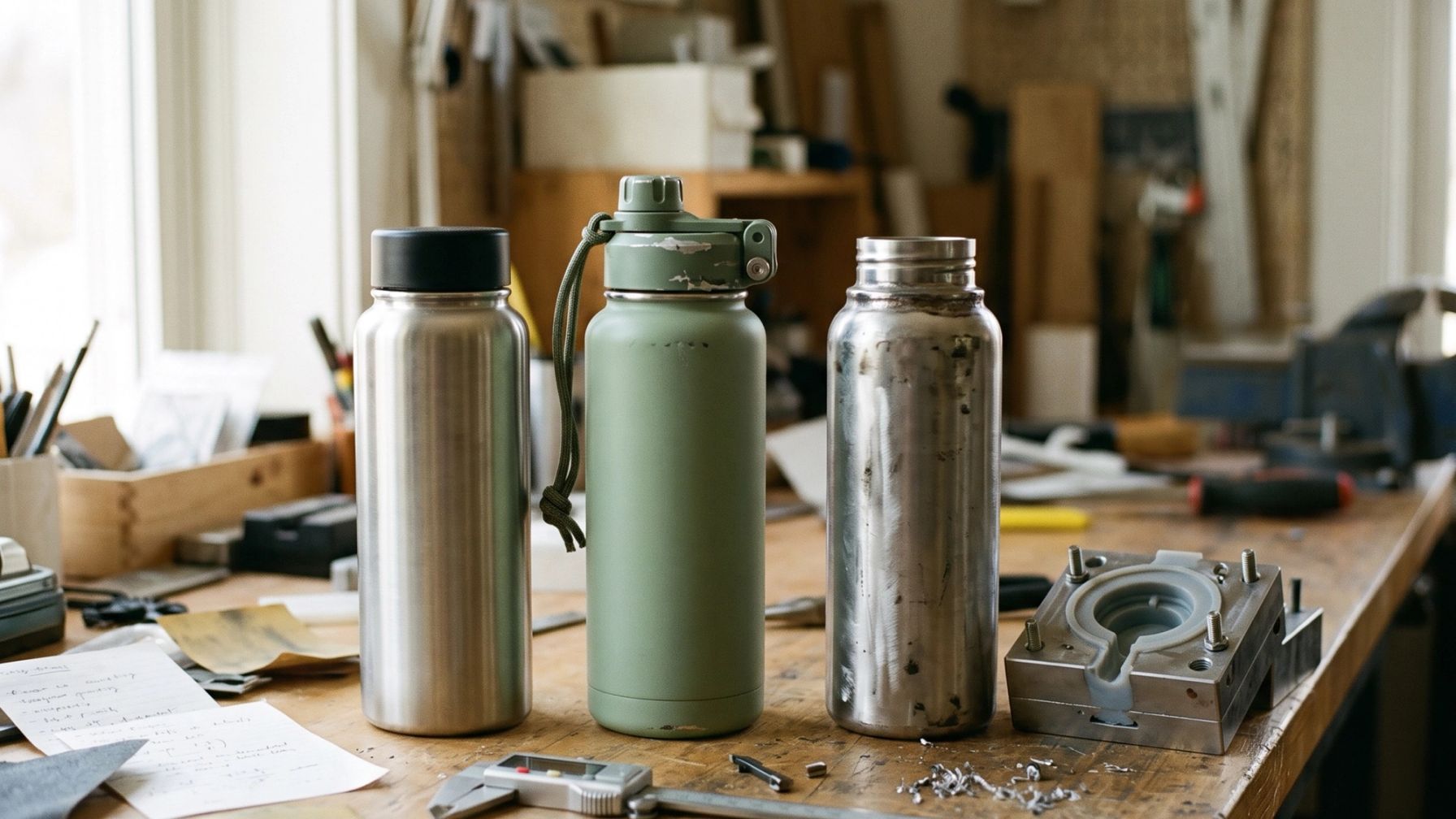
White label means selling a manufacturer's existing product under your brand, while other brands may sell the same product. Private label means the manufacturer makes a version for your brand only, to your formula or specification. Fully custom means a new design, built to your drawings.
Each level up adds one-off costs, raises the minimum order and adds months, so start at the simplest level that still gives customers a reason to buy from you. The steps below assume a physical product sold online, with pre-orders taken before the first order is placed.
White label vs private label: what each term means
The two terms are used inconsistently. In retail, private label means a store's own brand: the Private Label Manufacturers Association defines store brands as products that carry the retailer's name or its private brands. Among people selling online, "private label" often means any product sold under your own brand, which includes white label.
This article follows the split in Shopify's guide. A white-label product is pre-made and generic, with little or no change beyond your logo, and competitors can sell the same one. A private-label product is made for your brand alone, with your own formula, features or packaging.
A third level sits above both. A fully custom product is a new design, usually with parts nobody makes yet, such as a new mold or electronics. An industrial designer or engineering firm usually turns the idea into drawings and prototypes before a factory gets involved.
What OEM and ODM mean
Factories describe themselves with two more terms. An OEM (original equipment manufacturer) makes a product to the buyer's design, and the buyer owns that design. An ODM (original design manufacturer) designs and builds the product itself, and the buyer rebrands it and sells it as its own. IBM's explainer sets out both models. Some industries also use OEM for the brand that sells the finished product, as car makers do with their own parts, so check what a supplier means by it.
The two pairs line up roughly. Picking from an ODM's catalog and adding your logo is white label. Asking an ODM to adapt one of its products for you, or giving a specialist factory your own formula, is private label. Bringing a new design to an OEM factory is fully custom.
How the three levels compare
| Level | What is yours | MOQ and one-off costs | Time to stock |
|---|---|---|---|
| White label | Brand, packaging | Lowest; logo set-up, samples | Fastest |
| Private label | Formula or changes | Higher; development, samples | Slower |
| Fully custom | A new design | Highest; design, new molds | Slowest |
White label is fastest because the product already exists, and you choose from the maker's own colors and sizes. Private label usually takes several rounds of samples, and a custom product needs months of design and prototypes before production starts.
Ownership follows the same order. A white-label maker owns its product and may sell it to anyone. At the other two levels, your formula or design should belong to you, but only if you agree it in writing.
A worked example: an infuser bottle
The numbers below are invented and round. A founder wants to sell an insulated bottle with a tea infuser. Their research shows tea drinkers complain that infuser bottles leave the leaves in the water, so the tea turns bitter. Their idea is an infuser that comes out of the tea once it has brewed, without opening the bottle mid-commute.
1. Start from the reason people would buy it
Before you look at manufacturers, write one sentence on why a customer would pick your product over the ones already for sale. Base it on customer complaints and competitor reviews. If you haven't found it yet, start with product differentiation.
The founder's sentence: the tea stops brewing when you want it to. A logo, a nicer color and a push-button lid would be extras.
2. Find the hardest part to make
The level depends on the most demanding part of that reason to buy, and the novelty of the idea doesn't change it. Picture the factory's side of the job:
| What the factory has to do | Level | For a bottle, for example |
|---|---|---|
| Print your logo on a product it already sells | White label | A stock bottle in one of the maker's colors |
| Adjust a recipe, pattern or part it already makes | Private label | An existing lid mold, changed so the basket sits higher |
| Build tooling or a mechanism it has never made | Fully custom | A push-button lid that needs a new mold |
The founder's first design had a push-button that lifts the infuser out of the tea. No infuser-bottle maker has that part on the shelf, so the bottle as drawn is fully custom. Plenty of new ideas land lower than this, because a factory can often build them from parts it already uses.
3. See if the hard part can be done another way
Once you know which part sets the level, ask whether a cheaper route gets the customer the same result for the first batch. The push-button was the founder's way of lifting the leaves out, but the customer only cares that the tea stops brewing.
The founder found makers who already sell infuser bottles. One offered to change its lid mold so the basket clips into a higher position in the neck after brewing, clear of the tea. The tea still stops brewing, the push-button goes, and the first version moves down to private label.
The founder also looked at white label: a stock infuser bottle with their logo. The leaves would stay in the tea, which is the exact complaint the product exists to fix. Pre-orders for that bottle would say nothing about demand for the one they plan to sell, so a cheaper route only helps if the reason to buy survives it.
4. Compare the levels on first-order cash and time
For each level, add the first order (MOQ × unit price) to the one-off costs. That is the cash you put in before any customer has the product. The MOQ guide covers the rest of the order-size math.
The white-label maker charges $150 one-off for the logo set-up and a sample. The private-label one-off costs are $200 for samples and $1,500 to change the lid mold. The fully custom ones are $6,000 for design and $12,000 for new molds.
| Option | First order | Cash before a sale | Time to stock |
|---|---|---|---|
| White label | 300 at $8 | $2,550 | 6 weeks |
| Private label | 1,000 at $8 | $9,700 | 14 weeks |
| Fully custom | 3,000 at $6 | $36,000 | 40 weeks |
Fully custom has the lowest unit price, but spread over the first order its one-off costs make each bottle cost $12, against $8.50 for white label and $9.70 for private label. It saves $2 a bottle on the $8 price at the other two levels, so its $18,000 of one-off costs takes 9,000 bottles to pay back.
The founder chose private label: $9,700 and 14 weeks, against $36,000 and 40 weeks for the version they first drew.
5. Get quotes from the kind of supplier that fits the level
Each level needs a different supplier. For white label, search catalogs and marketplaces for a stock product that is nearly yours once the logo is on. For private label, look for factories that specialize in the category and take custom orders. For fully custom, the first partner is an industrial designer or engineering firm, and the factory that will make the tooling comes after.
Where to find a manufacturer covers the search itself, and the RFQ guide covers what to send. Name the level in your request, and ask each supplier for:
- the MOQ, and whether it applies per color or size;
- every one-off cost, listed separately from the unit price;
- the sampling time and the production lead time;
- who owns the formula, the design changes and any molds once you have paid for them.
Your name on the label brings legal duties
The FDA sets out the full duties on its page about the Modernization of Cosmetics Regulation Act.
6. Decide when to move up a level
The first level is for getting pre-orders and a first batch out. Move up when one of the signs below shows, and when you have enough confirmed demand that the next level's MOQ and one-off costs fit inside an order you could sell.
Signs it's time to move up a level
In the example, the push-button version needs 9,000 bottles to pay back its $18,000 of one-off costs. The founder plans to look at it again when sales are heading toward that number and customers are asking for the button.
Print on demand, handmade products and other exceptions
- Print on demand sits below white label: the product is printed after each order, so there is no minimum order. It suits artwork-led products, though you pay more per unit and the blank product is the same one other sellers use.
- If you can make all the pre-ordered units by hand, you don't need a manufacturer yet. You need suppliers for the materials and the packaging.
- Food, supplements, cosmetics and children's products have testing and labeling rules that apply to you whichever level you choose.
- If the reason to buy only exists at the fully custom level and the cash is out of reach, keep testing demand with a prototype and pre-orders before you pay for tooling.
Related questions
Once you know the level, the next steps are finding the manufacturer, sending them an RFQ and choosing your first order size.
Frequently asked questions
- Is private label the same as white label?
- Not quite, though people use the terms loosely. A white-label product is one the manufacturer already sells, with your brand on it, and other brands can sell the same thing. A private-label product is made for your brand only, usually to your formula, color or specification. In supermarkets, private label also means a store's own brand.
- Who owns the product in white label vs private label?
- With white label, the maker owns the design and can sell it to anyone. With private label, the formula, pattern or changes you paid for should belong to you, but only if the contract says so. Agree in writing who owns the design and any molds before you pay for them.
- What is the difference between OEM and ODM?
- An OEM, or original equipment manufacturer, makes a product to the buyer's design. An ODM, or original design manufacturer, designs the product itself, and the buyer puts its own brand on it and sells it. Many white-label products come from ODM catalogs.
- Which is better for a first product, white label or private label?
- Whichever is the simpler of the two that still gives customers a reason to buy from you. If a stock product with your logo on it gives them that reason, white label is cheaper and faster. If the reason is your own formula or a change to the product, you need private label.
- What is private label manufacturing?
- It is a manufacturer making a product that is sold only under your brand, usually by adapting something it already makes to your formula, materials or design. You pay for development and samples, and the minimum order is usually higher than for a white-label product.
Related
What is MOQ? Minimum order quantity for your first order
MOQ (minimum order quantity) is the smallest order a supplier will accept. What it means, why it exists, and how to size and negotiate your first order.

Where to find a manufacturer for a physical product
Most suppliers on the big sourcing sites are middlemen, not factories, whatever the listing says. How to tell them apart, and why the first quote isn't final.

Product differentiation: find the gap competitors leave
Product differentiation is why a customer picks you over what they use now. A method for small founders to find the gap competitors leave, with examples.
