
How to write a product specification sheet for a factory

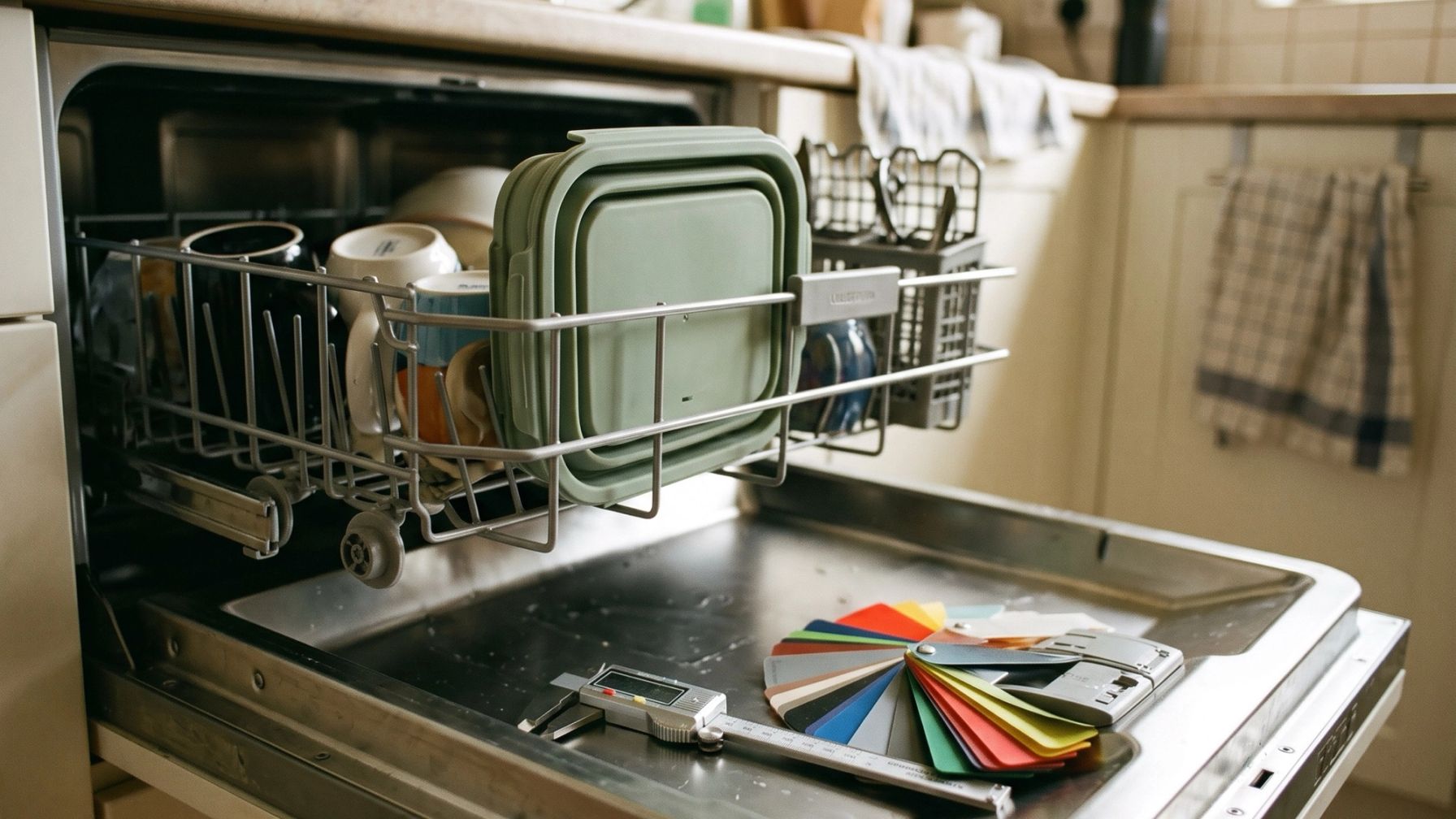
A product specification sheet is a document that tells a manufacturer what to make: what the product must do, its dimensions and tolerances, materials, colors, parts, packaging, and the tests it must pass. Factories price from it, and production is checked against it.
This guide is for a founder about to ask factories to quote a physical product, usually one sold online with pre-orders. The spec is the main thing your request for quotation sends. Some people call it a product brief, and clothing brands call it a tech pack (see below).
What a product specification sheet is for
A factory can only price what you describe. Where your document says nothing about the material, size or box, each factory picks one itself, and a factory competing on price picks a cheap one. Two factories that fill the gaps differently send back prices you can't compare. A full spec also tells the factory up front what the finished batch will be checked against.
What to decide yourself and what to leave to the factory
Write most lines as a result with a number and a way to check it. Fix a method or an exact part only when you have a reason you could explain to the factory, such as a promise on your product page or a legal requirement.
Factories already own molds and parts for products like yours, and a spec written as results lets them quote with what they have. Ask for clips that keep the lid shut through your leak test, and a factory may offer a clip it already makes. If you draw the clip yourself, the factory has to cut a new mold for it, and you pay for that.
A worked example: a collapsible silicone lunch box
The details below are invented and round. A founder is launching a collapsible lunch box for office workers, to sell for $26 on her own site, with pre-orders, in one color.
1. Say who it's for and what it must do
Open with a sentence or two an engineer can design for: who uses the product, where, and the problem it solves. "For office workers who carry a cooked lunch in a laptop bag. It must not leak in the bag and must fold flat once empty."
Then give each promise a number and a test. The lunch box holds 1,000 ml, folds to 40 mm high or less, and doesn't leak when filled with 800 ml of water, clipped shut and held upside down for 30 minutes. If you are still deciding which features belong in the first version, see minimum viable product examples.
2. List every part, and mark which ones the factory may design
Name every part, so the quote covers all of them. The lunch box has six: the body, the lid, two clips, a gasket and a steam vent plug.
Mark each one decided or open. The founder decided the materials and the logo, debossed on the lid, 30 mm wide and centered. She left the fold, the wall thickness, and the design of the clips and gasket to the factory, each with the result from step 1 it has to meet.
3. Give every dimension a tolerance
List the outside size open and folded: 190 × 140 × 85 mm open, 40 mm high folded. Add anything it must fit, such as a bag pocket or a dishwasher rack.
A tolerance is how far a finished unit may differ from a number and still pass. "190 mm ± 2 mm" accepts anything from 188 to 192 mm. Tight tolerances cost more to hold, so keep them tight only where a fit or a promise needs it. Capacity is what the founder sells on, so it gets its own tolerance: 1,000 ml ± 30 ml, meaning 970 to 1,030 ml.
4. Name the materials, finishes and colors
Give each material a grade the factory can buy against: platinum-cured food-grade silicone for the body and polypropylene for the lid, both matte. Body and lid touch food, so she names the US Food and Drug Administration (FDA) section she wants each to comply with. For the silicone, that is 21 CFR 177.2600, on rubber articles for repeated use. It lists silicone elastomers and limits how much the food-contact surface may give off when a lab extracts it with water or hexane. For the lid, it is 21 CFR 177.1520, which covers polypropylene.
Give colors as Pantone references, because "sage" means something different to every factory. The lunch box is Pantone 5565 C, a code from Pantone's guide for printing on coated paper. Pantone also sells plastic chips in all its Graphics colors, so for a molded part, ask the factory to match the physical chip in the same code, and approve the color on the sample. Factories often set a separate minimum order for each color, which is why she launches with one.
5. Spec the packaging and labels
The founder chose a kraft paper sleeve around the folded box, printed in one color. Approve the factory's dieline (the flat shape the sleeve is cut from) before printing.
Under 19 CFR 134.11, every imported article, or its container, must be marked in a conspicuous place with the English name of its country of origin, as legibly and permanently as the article allows, unless an exception applies. So "Made in China" is molded into the base and printed on the sleeve. GS1 US says each variation of a product you sell needs its own barcode, and licenses a single barcode number (a GTIN) for $30 with no annual renewal fee. One color means one code. Add the shipping carton: 24 units each, no heavier than 15 kg, so 500 units ship in 21 cartons.
6. Name the tests and certificates you need
List each check, who does it and when. Here, an independent lab tests both materials against those FDA sections before mass production. Before the order ships, a random sample of finished units gets the leak test and a size check, and its color and finish are compared with the approved sample, the unit you sign off before production. Keep one approved sample, and ask the factory to keep another.
Tests for the claims on your product page
7. Add quantities and reference photos
Ask for prices at the quantities you'll really order: here 500, 1,000 and 2,000 units in one color. Label each reference photo with what it shows. She sent another brand's collapsible box marked "reference for the fold only" and her own sketch with the step 3 dimensions, and wrote that the numbers in the spec apply wherever a picture differs.
End with what you'd like the factory to suggest, such as "propose a clip design and wall thickness that pass the leak test." Draper's Spec Your Product workshop walks you through writing a spec like this from your earlier research.
Summary of the lunch box spec
| Section | What the spec says |
|---|---|
| User and job | Office workers; no leaks in a bag, folds flat |
| Results | 1,000 ml ± 30 ml; no leak upside down for 30 minutes with 800 ml |
| Parts | Body, lid, two clips, gasket, vent plug; fold, clips and gasket open |
| Dimensions | Open 190 × 140 × 85 mm ± 2 mm; folded 40 mm high or less |
| Materials | Silicone to 21 CFR 177.2600; polypropylene lid to 21 CFR 177.1520 |
| Color and finish | Pantone 5565 C, matte, matched on the approved sample |
| Packaging | Kraft sleeve, one barcode, "Made in China" on base and sleeve, 24 per carton |
| Tests | Lab food-contact report; leak, size and color checks; 200 dishwasher cycles |
| Quantities | Price 500, 1,000 and 2,000; reference photo for the fold only |
Questions a spec should answer
What a clothing tech pack adds
Clothing brands call their spec a tech pack. There is no single required format; each brand lays one out its own way. The Fashion Institute of Technology's product development course has students build technical packages that include a bill of materials, construction details and specifications. Tech packs commonly also include:
- flat sketches, front and back line drawings with each detail called out;
- a measurement chart listing each point the garment is measured at, such as chest width or sleeve length, with a value for the sample size and a tolerance;
- grading, how each measurement changes from one size to the next;
- a bill of materials listing every fabric, trim, zipper, label and hang tag;
- construction details: seam types, stitching and how edges are finished;
- a size chart of the body measurements each size is made for.
When you need less than a full spec
- If you buy a white-label product, ask the supplier for its own spec sheet and mark your changes on it, such as the color, logo and packaging.
- With print-on-demand, the provider's catalog sets the product, so you supply artwork and pick from its options.
- For a single prototype from a local maker, a sketch, the main dimensions and a conversation are usually enough. Write the full spec when you ask for production quotes.
Related questions
The spec goes out with your request for quotation, and the quotes it brings back decide your first order size. Both come after testing demand before you build.
Frequently asked questions
- What is the difference between a spec sheet and a tech pack?
- They do the same job for different products. Tech pack is the clothing industry's name for a manufacturing spec. There is no single standard format, but most add what garments need: a measurement chart with a tolerance for each point, grading rules for how measurements change between sizes, a bill of materials listing every fabric and trim, and construction details such as seam and stitch types.
- What should a product specification sheet include?
- Who the product is for and what it must do, dimensions with tolerances, materials and finishes, colors as Pantone references, every component, packaging and labeling, the tests or certificates you need, the quantities to price, and reference photos or samples. Say which details are decided and which the factory may propose.
- Can I send a factory sketches instead of a spec?
- A sketch shows what the product looks like, but not what size it must be, what it is made of or how it will be checked. Factories quoting from a sketch alone each guess at those details, so their prices end up covering different products. Send sketches along with a written spec that holds the numbers.
- How detailed should a spec be for a first quote?
- Detailed enough that two factories would price the same product. Give numbers for anything a customer would notice or that your marketing promises, and leave engineering details to the factory along with the result each one has to achieve. Once you approve a sample, it becomes part of the spec too.
- Should I put a target price in my spec?
- Usually not in a first request. Factories that see a number tend to quote close to it, so you learn less about what each one would charge on its own. Keep the number to yourself and use it to judge the replies.
Related
What is an RFQ? How to request and compare factory quotes
An RFQ (request for quotation) asks suppliers to price the same product on the same terms. What to send a factory, an email template, and how to compare quotes.

White label vs private label vs custom: which do you need?
White label vs private label vs fully custom: what each means, how they differ on MOQ, cost and lead time, and how to choose the level your product needs.
Minimum viable product examples for physical products
Minimum viable product examples from physical brands, prototype vs MVP, and how to cut a long feature list down to a first product a factory can make.
