
What is landed cost? Break-even for your first order

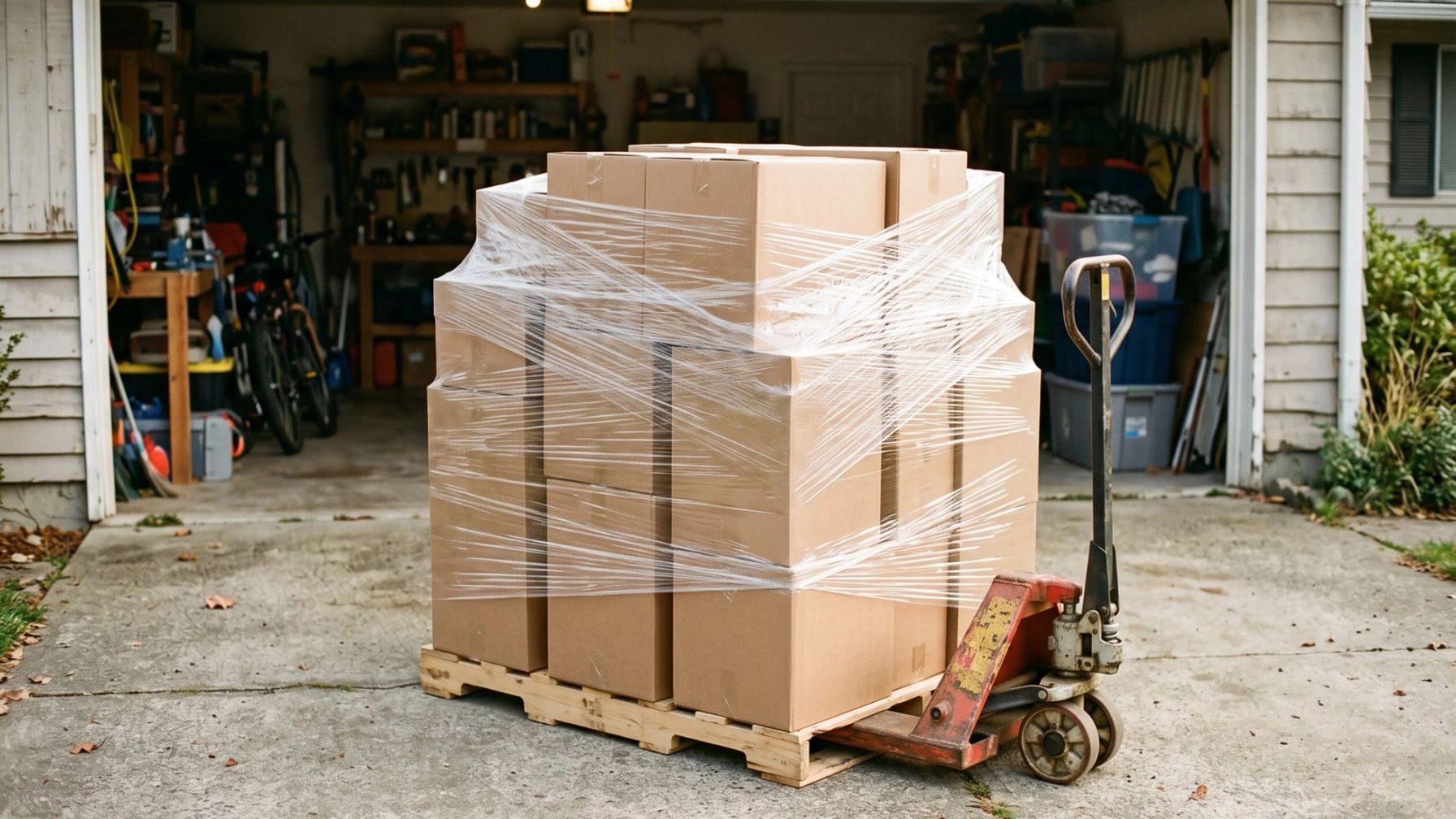
Landed cost is what one unit of a product costs once it has arrived at your door: the factory price plus freight, insurance, import duty, customs fees, a pre-shipment inspection and the cost of paying the supplier, divided by the number of units in the order.
Your break-even depends on it. On a small first order, the costs after the factory are a large part of the total: in the example below they add 54% to the factory price.
This article picks up the example from What is MOQ?, where an invented founder chose a first order of 300 units. It assumes a physical product made in China, imported into the US and sold online with pre-orders.
What is landed cost?
Landed cost per unit = (factory cost of the order + every cost of getting it to your door) ÷ units in the order.
The factory cost is the price on the quote, usually FOB: the factory pays to get the goods onto a ship at its port, and you pay for everything after that. The landed cost of the whole order is the cash you have out before any customer receives anything.
Some costs stay out of it. One-off costs such as molds and samples are counted separately, because they also serve later orders. Selling costs (payment fees on customer orders, packaging, postage and returns) and the cost of winning the customer belong to each sale. Step 4 uses them.
The worked example: 300 coffee drippers
The numbers are invented and round, carried on from the MOQ article. A founder sells a ceramic pour-over coffee dripper at $45 excluding tax. Factory B quoted 300 units at $7.40 FOB, so the order costs $2,220 at the factory. Landed, it costs $3,420, or $11.40 a unit. The steps below break down the $1,200 in between.
1. Get a quote for every cost line
- The factory quotes the unit price. Check that every quote is FOB from a named port, so you compare them on the same terms; how to request and compare quotes covers this.
- A freight forwarder quotes freight door to door and cargo insurance. Send them the factory's port, the carton size, weight and units per carton, and your delivery address. A few hundred units usually travel in a shared container, priced mainly by volume.
- A customs broker quotes the fee for clearing the goods. Many forwarders do this as well.
- The import duty comes from the US tariff schedule (step 2).
- An inspection firm checks the goods before you pay the balance. V-Trust charges $268 a person-day in China's main manufacturing regions, travel included. The example budgets one day, which suits a small order of a simple product.
- Your bank charges for each transfer to the factory, usually two: a deposit and a balance.
Ask for each figure at your actual quantity. A quote for 1,000 units divided by three doesn't give you the cost of 300, because several of these charges stay the same whatever the order size.
2. Look up the import duty and customs fees
US import duty depends on the product's code in the Harmonized Tariff Schedule (HTS), which you can search at hts.usitc.gov. The code can change the duty a lot. Among household ceramics that aren't porcelain, for instance, coarse-grained stoneware and earthenware come under 6912.00.10 at a general rate of 0.7%, while the line for other tableware and kitchenware, 6912.00.48, is 9.8% (both checked October 19, 2026). Classifying a product is your customs broker's job, so ask them for your product's code and rate instead of picking a line yourself.
Duty is charged on the value of the goods, which on an FOB quote is the factory price without the international freight and insurance.
Many goods made in China also pay extra duties on top of the general rate. These sit in chapter 99 of the HTS, under Section 301 and other tariff actions, and they changed more than once during 2026, so check the total rate with your broker the week you order. The example gives the dripper no code and uses an invented total rate of 15%: $333.
Two customs fees apply on top, from CBP's user fee table for the year from October 1, 2026:
- The Merchandise Processing Fee (MPF) on a formal entry is 0.3464% of the goods' value, with a minimum of $34.58 and a maximum of $670.86. A shipment worth $2,500 or less can usually go through a cheaper informal entry, but goods worth over $250 that carry the extra China duties need a formal entry, so the example uses one. On $2,220 the percentage comes to $7.69, so this order pays the minimum, which is 1.56% of its value.
- The Harbor Maintenance Fee (HMF) is 0.125% of the value of goods arriving by sea: $2.78 here.
3. Add it up, and split per-shipment costs from per-unit costs
All figures are invented except the inspection, the MPF and the HMF:
| Cost | Order | Per unit |
|---|---|---|
| Factory price, FOB | $2,220.00 | $7.40 |
| Sea freight, door to door | $350.00 | $1.17 |
| Cargo insurance | $21.64 | $0.07 |
| Import duty (invented 15%) | $333.00 | $1.11 |
| MPF (minimum) | $34.58 | $0.12 |
| HMF | $2.78 | $0.01 |
| Customs broker | $150.00 | $0.50 |
| Inspection, one day | $268.00 | $0.89 |
| Transfer fees, two payments | $40.00 | $0.13 |
| Landed cost | $3,420.00 | $11.40 |
Freight grows with the volume, and duty, insurance and the HMF grow with the value. The broker, the MPF minimum, the inspection day and the transfer fees are charged once per shipment whatever its size. Here those come to $492.58: $1.64 a unit on 300 units and $0.82 on 600. Shared-container freight also has minimum charges, so a small shipment pays more per unit there too.
That is why the landed cost falls faster than the factory price as the order grows. In the MOQ example, moving from 300 to 600 units cut the factory price by $0.50 a unit and the landed cost by $1.91.
4. Work out the break-even point
The standard break-even point formula is:
Break-even point (units) = fixed costs ÷ (price per unit − variable cost per unit)
For a first order, the fixed cost is the landed cost of the order: once it's paid, it's spent whether you sell 10 units or 300. In place of the part in parentheses, use the money each sale leaves to pay down the order: the price without sales tax, minus selling costs, minus the cost of winning the customer. Don't subtract the landed cost per unit as well. It is already inside the fixed cost, and taking it off again would count it twice.
In the example, selling costs are $9 a sale and winning a customer is assumed to cost $15.
- Each sale brings in $45 − $9 − $15 = $21.
- Break-even = $3,420 ÷ $21 = 162.9, rounded up to 163 sales, or 54% of the order.
- In revenue, that's 163 × $45 = $7,335.
One-off costs such as a mold aren't in that figure. To see how many sales cover them as well, add them to the $3,420 and divide by $21 again.
The customer cost and the duty stay estimates until real figures come in, and both move the answer. At $24.60 per customer ($45 − $9 − $11.40), each sale would earn back the landed cost of its own unit and nothing more, so the order would only break even if every one of the 300 sold. If the real duty were double the invented $333, the order would cost $3,753, or $12.51 a unit, and the break-even would rise to 179 sales.
5. Map when each payment is due
The order cost goes out in stages. Count from the day you place the order and note the week each payment falls in. The terms and timings below are invented, so use your quote's payment terms and your forwarder's transit time.
| Week | Payment | Amount | Paid so far |
|---|---|---|---|
| 0 | Deposit (30%) and transfer fee | $686.00 | $686.00 |
| 6 | Inspection | $268.00 | $954.00 |
| 6 | Balance (70%) and transfer fee | $1,574.00 | $2,528.00 |
| 7 | Freight and insurance | $371.64 | $2,899.64 |
| 13 | Duty, MPF, HMF and broker | $520.36 | $3,420.00 |
Nearly three quarters of the money goes out before the goods leave China, and all of it before the first customer receives anything. Hold the balance until the inspection report comes back clean. Once the factory has been paid in full, you have little leverage to get a bad batch fixed.
The ad spend comes earlier still. At $15 each, 163 pre-orders cost $2,445 in ads before you place the order.
6. Turn the break-even into a pre-order target
With pre-orders, the break-even becomes a target: once 163 people have paid, the order pays for itself at the assumed customer cost. A small ad budget brings the pre-orders in and gives you a real figure for what a customer costs to win, so rework step 4 with it before you order. It's also how you test demand before you build.
Pre-order money takes time to reach you. Stripe says a new account's first payout typically arrives within 14 days of its first payment. If the deposit depends on that money, place the order after it lands. In the example, the founder's $5,000 loss limit (with marketing budgeted separately) covers the whole $3,420, so they can pay the factory themselves and hold the pre-order money back for refunds.
Pre-order money is still refundable
Air freight, small parcels and products made in the US
- Air and express freight are priced by weight and arrive sooner, and they usually cost more per unit. There is no HMF, because it applies to goods arriving by sea. An express courier often clears customs for you and adds its own fee.
- Since August 29, 2025, imports into the US valued at $800 or less no longer enter duty free, so sending stock in small parcels doesn't avoid duty.
- If the product is made in the US, there is no duty or customs fee. The landed cost is the factory price plus delivery to you, and the break-even works the same way.
Related questions
Choosing how many units to order comes first: What is MOQ? compares order sizes on cash and break-even. Getting quotes you can compare line by line is covered in What is an RFQ?.
Frequently asked questions
- How do you calculate landed cost?
- Add the factory cost of the order to every cost of getting it to your door: freight, cargo insurance, import duty, customs fees, the customs broker, a pre-shipment inspection and the fees for paying the factory. Divide the total by the number of units. Get each figure quoted for your actual quantity, because many of these charges are per shipment and don't shrink with a smaller order.
- What is included in landed cost?
- The factory price plus the costs of getting the goods to you: freight, insurance, import duty, customs fees and brokerage, inspection and payment fees. One-off costs such as molds and samples, selling costs such as postage to customers, and marketing are kept out of it and counted separately.
- What is the difference between landed cost and COGS?
- Landed cost is what a unit costs to get to your door. Cost of goods sold is an accounting figure for the cost of the units you actually sold in a period, and for a product business it is usually built from the landed cost of those units. Use landed cost for margins and break-even.
- Does landed cost include VAT?
- There is no VAT on imports into the US, so the question doesn't arise there. In the UK, a VAT-registered business can reclaim import VAT as input tax, so it is usually left out of the landed cost, although it still has to be paid or accounted for when the goods arrive. A business that isn't registered should include it.
- What is the break-even point formula?
- Break-even point in units equals fixed costs divided by the price per unit minus the variable cost per unit. For a first product order, use the landed cost of the whole order as the fixed cost, and the price less selling costs and the cost of winning the customer as the amount per unit. Round up to a whole sale.
Related

What is MOQ? Minimum order quantity for your first order
MOQ (minimum order quantity) is the smallest order a supplier will accept. What it means, why it exists, and how to size and negotiate your first order.

What is an RFQ? How to request and compare factory quotes
An RFQ (request for quotation) asks suppliers to price the same product on the same terms. What to send a factory, an email template, and how to compare quotes.

How do I run ads to test a business idea?
An ad test asks three questions in turn: can you reach your market, do they respond to your pitch, will they leave an email? It answers no far better than yes.
