
What TikTok hooks are working for fashion creators in 2026?

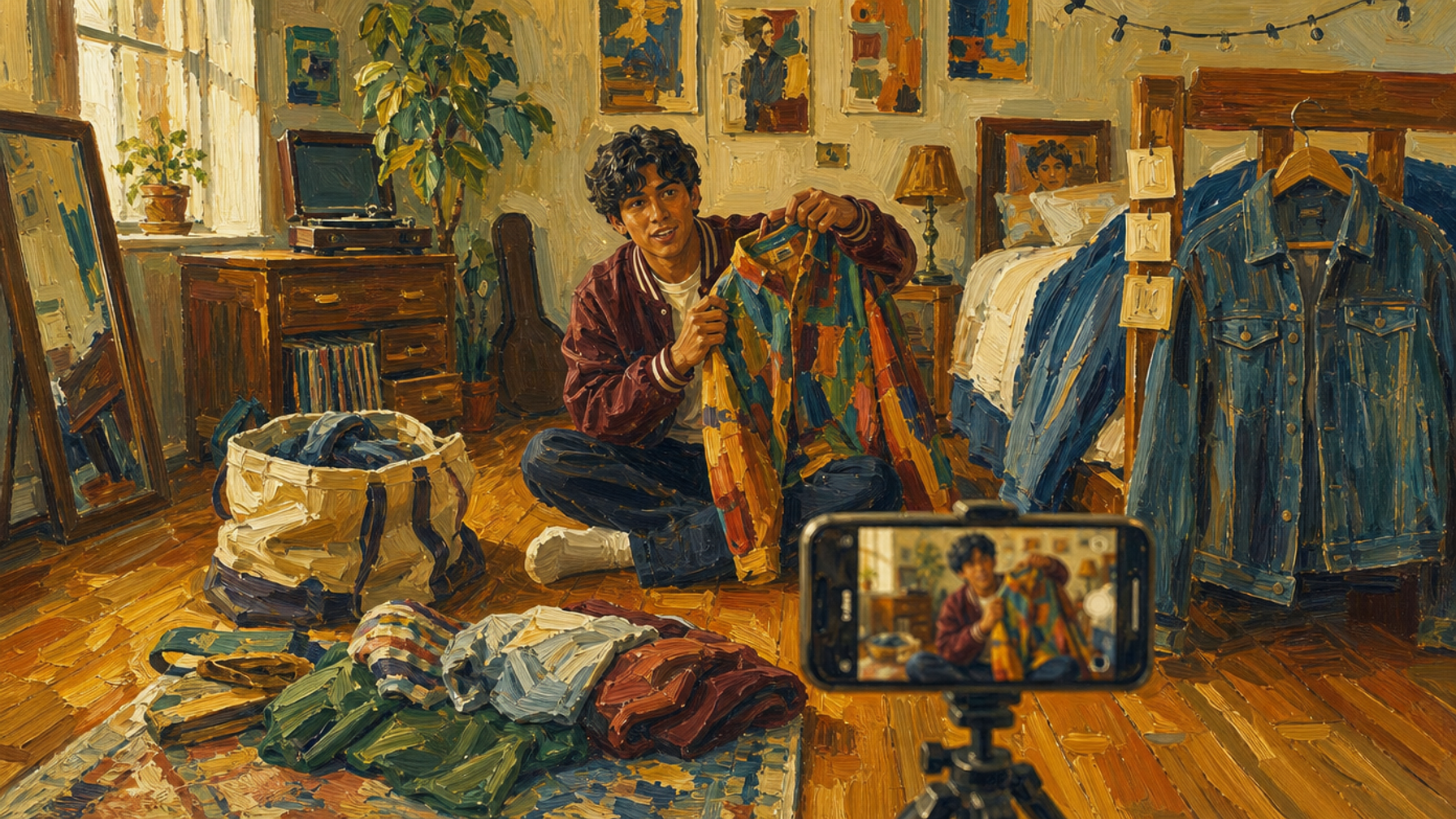
Story beats style on fashion TikTok in 2026. Across the highest-engagement posts Draper pulled from creators in the 10K–500K follower band, narrative-led GRWM hooks outperform trend-list and tutorial formats — @v3mpxxett's "sad day for him 😅❤️🩹" drove 255,500 likes and 1.8M views without naming a single product. The outfit is secondary; the situation is the hook.
What does the data show?
Six hook types emerge from the dataset. Ranked by the share of viewers who liked, rather than by raw likes, they sort in an order that raw engagement counts would hide.
- Aesthetic silence23.9%
@signature.rose — 6,900 likes on 28,900 views. Caption: "#pinterest #foru #fyp #fashion #for".
- Narrative GRWM14.2%
@v3mpxxett — 255,500 likes on 1.8M views. Caption: "sad day for him 😅❤️🩹".
- Item obsession13.1%
@mysthegreat — 1.9M likes on 14.5M views. This account sits well above the 10K–500K band.
- Haul / retailer drop11.3%
@thefashionfreakk — 20,700 likes on 183,100 views. Caption: "Get ready with me to go shopping".
- Trend list3.8%
@livelizabethgifford — 1,000 likes on 26,200 views. Caption: "What cool girls will be wearing for spring 2026 part 2".
- Situational wardrobe2.1%
@corryn_timm — 915 likes on 43,600 views. Caption: "Vacation outfits I would be packing this spring ✨".
Calculated from the like and view counts of the top post in each category. A ratio measures how many of the people reached responded, not how many were reached — which is why the largest post in the set, at 14.5M views, comes third here.
Narrative GRWM works by withholding resolution. "Sad day for him" raises a question the viewer wants answered, and the outfit becomes the answer — engagement is driven by comment bait, with viewers asking what happened. It is the strongest format in the sample among accounts that are actually in the mid-tier band.
Aesthetic silence converts the highest share of anyone. @signature.rose's post took 6,900 likes from 28,900 views by letting the visual alone stop the scroll — about 1.7 times the conversion of the narrative-GRWM post, though on a fraction of the reach.
Item obsession is the outlier, and worth reading carefully: @mysthegreat's all-caps "I LOVE these shoes they're my favorite" hit 1.9M likes and 14.5M views, with the comment section filling with "what are these??". That account is far larger than the band this analysis covers, so treat the post as a demonstration of what the format can do at scale rather than as evidence of what it will do for a 40K-follower creator.
Reach and conversion rank these formats differently
What should marketers do with this?
Brief creators on narrative GRWM before any other hook. The construction is replicable: the caption opens with an emotional or situational premise rather than a product description, the on-screen text mirrors or expands that premise in the first two to three seconds, and the first frame shows the creator in a pre-outfit state to set up the transformation. The outfit lives in the middle of the video, not the opening.
Pair that with sincere item declarations where they fit. @mysthegreat's "I LOVE these shoes they're my favorite" is the clearest example — the all-caps "LOVE" communicates authentic emotion instantly, no hedging, no trend language. Comments fill with "what are these?" and the resulting comment volume drives reach. The format works for any creator with a genuine attachment to a single product, and breaks fast if it reads as scripted.
Be realistic about trend lists. @livelizabethgifford's "what cool girls will be wearing for spring 2026" is the weakest converter in the set at 3.8%, and trend content dates faster than anything else a creator can post. It has a place as filler between stronger formats; it is not worth a brief of its own.
What's the emerging signal in this data?
Situational wardrobe hooks are underused relative to the reference value they pull, and the metric that makes them look worst is the evidence for it.
@corryn_timm's "vacation outfits I would be packing this spring" drew 915 likes on 43,600 views — the lowest like-to-view ratio in the entire sample, at 2.1%. But it out-reached both the aesthetic-silence post and the trend-list post, and collected almost no likes doing it. That gap is what reference viewing looks like: someone planning a trip watches the video for information, returns to it later, and never thinks to tap the heart. The like is a social gesture and this audience is not there to be social.
For fashion brands working with creators, the play is to brief one situational-wardrobe post a month against an upcoming cultural moment — festival season, holiday packing, the wedding circuit. It will underperform on the surface metric every time. It keeps pulling planning-intent viewers, who are the ones closest to buying something.
Frequently asked questions
- What hooks are working best for fashion creators on TikTok in 2026?
- Six hook types recur in the data, but they do not perform alike. Narrative GRWM (story-led, outfit-second), aesthetic silence (zero caption) and haul/retailer drop carry the strongest engagement. Trend-list and situational-wardrobe posts top out far lower on likes — which does not make them useless, but does mean they are doing a different job.
- What was the highest-engagement fashion TikTok format in Draper's analysis?
- Narrative GRWM, among creators actually in the 10K–500K band — @v3mpxxett's 'sad day for him 😅❤️🩹' drew 255,500 likes and 1.8M views. The outfit becomes the answer to the story; viewers stay to find out what happened. @mysthegreat's item-obsession post hit 1.9M likes and 14.5M views, but that account sits well above the mid-tier band and is best read as a ceiling rather than a comparison.
- Are zero-caption fashion TikToks actually working?
- Yes, on efficiency rather than scale. @signature.rose's post (caption: '#pinterest #foru #fyp #fashion #for') converted about 24% of the people who saw it into likes — the highest ratio of any top post in the sample, and roughly 1.7 times the narrative-GRWM post. It did that on 28,900 views. The Pinterest hashtag signals intentional aesthetic alignment; the visual alone stops the scroll.
- What's the underused fashion-TikTok hook in 2026?
- Situational wardrobe hooks — occasion-based packing or planning ('vacation outfits I would be packing this spring'). It has the lowest like-to-view ratio in the sample at 2.1%, and that is the tell rather than the flaw: 43,600 people watched and almost none of them liked it, which is what reference viewing looks like. People planning a trip are not there to applaud.
- Should fashion brands optimise for likes or for reach on TikTok?
- Decide before you brief, because the two rankings differ. Aesthetic silence converts the highest share of the audience it reaches but reached fewer than 30,000 people. Situational wardrobe reached more people than either the aesthetic-silence or trend-list posts while collecting almost no likes. Neither number is the wrong one — but a brief that chases both produces content that does neither well.
Related
What Instagram Reels hooks are working for fashion brands in 2026?
List and countdown hooks reach furthest on fashion Reels in 2026. The top one took 14.8M views with an ordinary like rate, and that's the useful part.

What hooks are top fitness creators using on TikTok in 2026?
Three hook types lead fitness TikTok in 2026: constraint framing, mistake correction and identity shifts. The top post, at 14.6M views, teaches no fitness.
What TikTok hooks are working for beauty creators in 2026?
Hair salon POV hooks win raw reach on beauty TikTok in 2026, with one hitting 3.8M views. Era-reset hooks drive the highest comment rate, at 0.41%.