
Founder-market fit: is this business idea right for you?

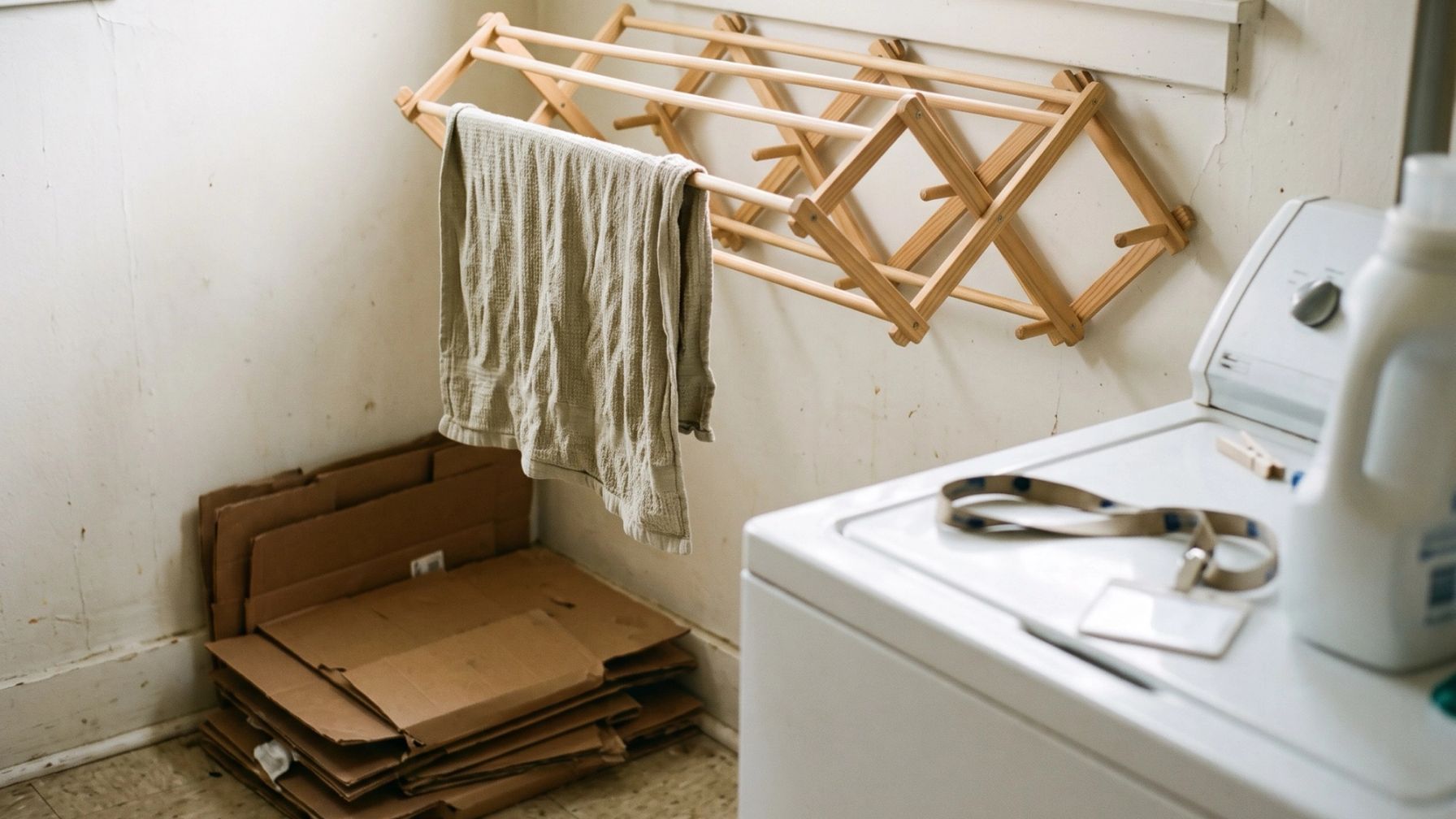
Founder-market fit is how well a founder suits the business they are starting. For a side business with a physical product, it means checking that what the idea needs (money to start, hours a week, skills, months until it earns) fits what you have and want.
A feasibility study asks whether a product can make money at all. This check uses your own goal and limits, so one idea can pass for one person and fail for another. A rack that earns $20 a sale suits someone who wants $1,000 a month, and can't work for someone hoping to replace a $4,000 salary in 6 hours a week. The steps assume you sell a physical product online and take pre-orders before ordering stock.
What founder-market fit means
Investor Chris Dixon wrote about the idea in a 2011 post, using David Lee's term "founder/market fit". Dixon called it the best predictor of whether a startup reaches product/market fit, and described founders who "have a deep understanding of the market they are entering." In February 2020 James Currier of NFX set out four signs of it: obsession with the market, a founder story customers identify with, a personality that fits in with the people in that market, and experience.
Those signs are for founders raising money to go after a large market. A side business needs a version you can count: whether you can afford to start it, run it in the hours you have and wait for it to pay back. What you know about the product and its buyers comes in at step 6.
The worked example: a wooden drying rack
The founder and her numbers are invented and round. Dana works full time and wants to sell a fold-down wall drying rack in beech, made for small apartments, at $80 from her own site. She has built furniture as a hobby for years.
1. Set your goal as one number and a date
Side-business goals usually take one of three forms:
- Extra income: a profit figure a month, by a date. Use profit, since revenue includes the cost of the stock.
- A full-time business: profit that replaces your salary and the benefits that come with it.
- Learning: a sum you will spend to learn how products are made and sold, with no income target.
Every later step measures the idea against this number. Dana wants $1,000 a month in profit within 12 months. If she wanted to replace a $4,000-a-month salary with the same rack, she would need 202 sales a month, about 47 a week, and packing them alone would take nearly 8 hours a week.
2. Write down what you can put in
List three things:
- The money you could lose without it changing your plans. Leave out savings you need, loans and credit limits.
- The hours you have free in an ordinary week, after work, travel and family.
- What you know and who you can reach: skills, a trade, an audience, buyers you already talk to.
Dana can lose $4,000 and has 6 hours a week. She has never run an ad or imported anything.
Which money to count
3. Work out how much money you need to start
The money you need to start is everything you pay before sales begin paying you back. The first order is usually most of it: the factory's minimum order (what MOQ means) multiplied by the landed cost of each unit, the price once freight, duty and fees are added.
Registration costs little. You are a sole proprietor as soon as you start selling on your own, with no state formation filing, and an EIN from the IRS is free. An LLC adds state fees. In California that is $70 to file and an $800 annual tax, due every year until you cancel the LLC, even in a year the business doesn't trade. LLC vs sole proprietor covers when the switch is worth it.
Dana's rack is her own design, so it needs two rounds of samples, and the factory's minimum is 300.
| Cost line | Dana's custom rack |
|---|---|
| Samples, two rounds | $600 |
| Ad test to take pre-orders | $500 |
| Product photos | $300 |
| Store and domain, three months | $120 |
| Sole proprietor, free EIN | $0 |
| First order: 300 at $25 landed | $7,500 |
| Money to start | $9,020 |
That is $5,020 more than she can lose. Pre-orders can't fill the gap, because in the US a customer can cancel for a refund if you miss the shipping date you promised.
4. Count the hours a week at the sales your goal needs
Profit per sale is the price minus the landed cost, the selling costs (card fees, packaging, delivery, a returns allowance) and the cost of winning the customer. For Dana: $80 − $25 − $20 − $15 = $20. Her store costs $40 a month, so $1,000 of profit takes 52 sales a month, which is 12 a week.
Then time a week at that pace. Packing, customer messages and returns go up with each order; posting, ads, reordering and bookkeeping take about the same hours at 5 sales a week or 15. Time yourself packing a sample before you trust a per-order figure.
Dana packs a rack in 10 minutes, so 12 sales take 2 hours. Posting, ads and admin take another 4. That uses all 6 of her hours and leaves nothing for a bad week.
5. Check how long until it earns
Count the weeks until stock arrives (samples, the pre-order campaign that tests demand, production, freight and customs), then the sales it takes to earn back the money to start. The stock is already paid for, so each sale returns the price minus selling costs and the cost of winning the customer.
Dana's stock arrives in week 21: 6 weeks of samples, 4 of pre-orders, 6 of production and 5 at sea and in customs. Each sale returns $80 − $20 − $15 = $45, so getting $9,020 back takes 201 sales. At 12 a week that's 17 weeks, so she has her money back around week 38, in month 9 of her 12.
6. Match each job to who will do it
List the jobs from ordering samples to handling returns, and write a name beside each. If the name belongs to someone you'll pay, add their fee to the table in step 3. A blank beside a job the product can't do without is a gap the money and hours won't show you.
Dana's years of building furniture count here: she can check the hinges and finish on a sample before 300 racks are made. She will learn to run ads during the pre-order test, the photographer is the $300 already counted, and a freight forwarder handles customs.
7. Fix the line that misses by most, then recheck the rest
Put the idea's numbers next to yours and start with the biggest miss, because fixing it usually moves the other lines. Dana's is money: $5,020 over what she can lose. She switches to the factory's existing beech rack with her logo on it: a minimum of 100 at $28 landed, and one $100 sample. Her fold design waits until the first batch sells, and her pre-order page will show the rack she is actually going to ship.
| What the idea needs | Custom rack | Existing rack, 100 units | What Dana has |
|---|---|---|---|
| Money to start | $9,020 | $3,820 | $4,000 |
| Hours a week at her goal | 6 | 6 h 20 min | 6 |
| Money back by | Month 9 | Month 6 | Month 12 |
The cheaper start costs her time. At $28 landed each sale makes $17, so her goal takes 61 sales a month, about 14 a week. That is 20 minutes a week more than she has, until a reorder of 300 brings the unit cost back to $25. Stock arrives in week 15, and at 14 a week the 85 sales that earn back $3,820 take 7 weeks, so she has her money back around week 22. She decides she can find the 20 minutes, and orders the sample.
Some gaps have no fix you would accept: the salary goal in step 1 needs about 47 sales a week, or nearly 12 hours of work against her 6. If the only fixes left are borrowing, hours you don't have or a goal you don't want, the idea doesn't suit you right now. Keep your goal and limits, and run the next idea against them.
Draper's Check Founder-Idea Fit workshop runs these numbers with you from your own goal and costs.
Businesses that need a different check
- If you plan to raise venture money, investors will judge you on signs like Currier's, and the scale they expect changes the goal in step 1.
- If you make the product by hand, time a whole unit before step 4. Hours per unit usually decide the answer.
- If you don't yet have a landed cost or a cost to win a customer, find those first, or steps 3 to 5 rest on guesses.
- If your goal is learning, the money to start matters most. Set it as a cap and stop when it's spent.
Related questions
If you are still deciding whether to start anything, read should I start a business at all. If the money to start is close to zero, how to start a business with no money covers the shapes that work without stock, and how to validate a business idea before you quit your job covers testing while you keep your salary.
Frequently asked questions
- What is founder-market fit?
- It is how well a founder suits the business they are starting. Investors look for obsession with the market, a founder story customers identify with, a personality that fits the market's people, and experience. For a side business, check whether the money to start, the hours a week, the skills and the wait until it pays back fit what you have and what you want from it.
- Do I need to be an expert in an industry to start a business in it?
- No. Knowing the product or its buyers helps most when you judge samples and talk to customers. You can pick up ad buying during a pre-order test, and hire a photographer or a freight forwarder for the rest. Write down who will do each job, and add anything you pay others to your startup costs.
- How much money do I need to start a business?
- For a small physical-product business, add up everything you pay before sales start paying you back: samples, a test ad budget, product photos, a store and domain, registration and the first order at landed cost. The first order is usually most of it. A sole proprietorship needs no state formation filing, and an EIN from the IRS is free.
- Should I start a business?
- Start one if a specific idea fits your profit goal, the money you could lose and the hours you really have each week. Work out what the idea needs on each, compare it with what you have, and fix the biggest gap before you spend anything. Keep your job while you find out.
- How do I test founder fit before I quit my job?
- Do the numbers first: the cash to start, the hours a week at the sales your goal needs, and how many months until you have your money back. Then run a small pre-order test on the side. Real orders and real packing time will replace your estimates before you hand in your notice.
Related
What is a feasibility study? How to check a product idea
A feasibility study checks whether an idea can work before you spend on it. A one-week version for one physical product, with a full worked example.


Should I start a business at all?
The case for starting something of your own comes down to ownership. Here is how to test whether it is your move, without betting anything first.

How to validate a business idea before you quit your job
Test the idea on real customers while your salary still covers the rent. Hybrid founders who go full-time later fail less often than founders who quit first.