
Alibaba vs AliExpress vs Made-in-China: which to use

Use AliExpress to buy one unit of a product that already exists, and Alibaba or Made-in-China.com to find a supplier who will put your brand on it or make it to your spec. Which one you need depends on how much of the product is yours.
Once you have two or three candidates, order a sample from each. Have every sample sent to the same forwarding warehouse in China, then ship them to yourself in one box. This guide covers both decisions and the sample run, for a founder selling a physical product online who hasn't placed a first order yet.
Which site fits each level of customization
Before you open any sourcing site, decide how much of the product has to be yours. There are four levels, and each one points to a different kind of supplier. The white label vs private label guide explains how to choose between them.
| Level | Supplier you need | Where to look |
|---|---|---|
| White label | Seller of a stock product | AliExpress, then Alibaba |
| Private label | Specialist factory | Alibaba, Made-in-China |
| Fully custom | Designer, then a factory | Made-in-China, Alibaba |
| Made by you | Materials suppliers | AliExpress, local |
Pick the simplest level that gives customers a reason to buy from you. Each step up means higher minimum orders, more sampling and longer lead times.
Alibaba vs AliExpress: wholesale or retail
Alibaba Group owns both sites, and they do different jobs.
AliExpress is retail. You buy one unit at a fixed price, with no minimum order. The product comes as listed, and a few sellers offer simple logo printing. That makes AliExpress useful in two places: seeing what a stock product actually looks like before you talk to anyone about making it, and buying the products you'll compete against.
Alibaba is wholesale. Suppliers list a minimum order quantity, or MOQ, and the unit price falls as the quantity rises. This is where you ask for your logo, your packaging, a different color or a changed part. Prices are quotes, and quotes move when you negotiate. On-platform payments can go through Trade Assurance, which holds the money until the order is confirmed as received.
The same factory often sells on both sites. A stock product with your logo on it is still the factory's design, and other sellers can list the identical item next to yours. That works when your brand or packaging is the reason people buy. If it isn't, go back to product differentiation before you order anything.
Alibaba vs Made-in-China: two catalogs to search
Once you know you need a manufacturer, the choice is Alibaba.com or Made-in-China.com. Both are Chinese B2B marketplaces, and many suppliers list on both.
Alibaba is the bigger catalog, so you'll get more results for almost any search. Many of them are trading companies, which list next to factories and look the same. The guide to finding a manufacturer covers how to tell the two apart.
Made-in-China.com is smaller and is often described as more industrial, with a bigger share of machinery, hardware and parts suppliers. What sets it apart is the Audited Supplier badge: an inspection firm, one of SGS, Bureau Veritas, TÜV Rheinland or CTI, has checked the supplier on site, and Made-in-China says the audit reports are free to read online. Payments can go through its Secured Trading Service, which holds your money before it reaches the supplier.
An audit tells you the factory exists and what it says it can do. It doesn't tell you whether your sample will be good, and a trading company can be audited too.
Search both sites and send every candidate the same request for quotation. The RFQ guide covers what to put in it. For a product with engineered parts, start with Made-in-China. For consumer goods with a large existing category, start with Alibaba.
Order samples from two or three suppliers
One sample tells you whether a supplier can make the product. Two or three, made to the same spec, tell you which one makes it best. You compare finish, materials and packaging side by side, and how each supplier dealt with the order shows you what working with it will be like.
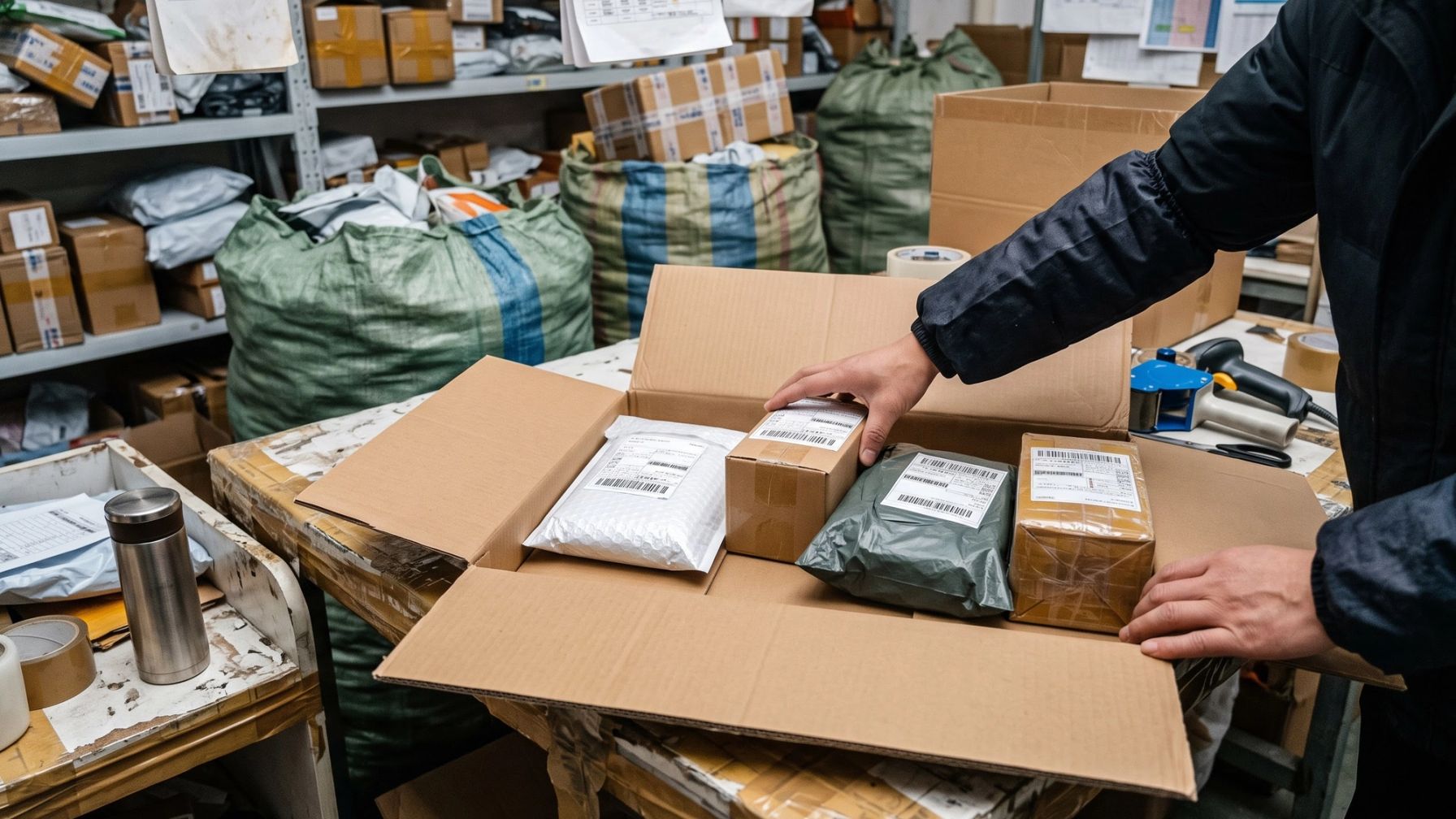
Sent separately by international express, each sample can cost more to ship than to make, and every parcel clears customs on its own. A forwarding warehouse fixes both problems. Each supplier sends its sample by domestic courier to an address in China. The warehouse collects them, combines them, and ships one parcel to you.
Superbuy is one service that does this. Its warehouse in China accepts parcels from sellers in mainland China, so it works with suppliers from Alibaba and Made-in-China, as well as 1688, Alibaba's domestic site.
Samples from three suppliers, one parcel
Agree the sample with each supplier
Send every supplier the same spec. Confirm the sample price, what the sample includes, and whether the fee comes off a later bulk order.
Get the warehouse address
Open a Superbuy account. Its forwarding page says to ask customer service for the warehouse address.
Pay on the platform
On Alibaba, pay each sample through Trade Assurance, with the warehouse as the delivery address, and write the sample's spec into the order. On Made-in-China, use Secured Trading and check its order terms for a China delivery address first. Ask each supplier to send it by domestic courier.
Register each parcel
When a supplier sends its tracking number, submit a forwarding order with it. Superbuy wants the tracking details within 15 days of approving the order, and a parcel whose details come in late is kept for only 60 days.
Check what arrived
Items are stored free for 90 days from arrival. Ask for photos as soon as each sample lands, so you see it before it leaves China. Superbuy's fee page uses CN¥3 for detailed photos in its worked example.
Combine and ship
Once every sample is in, ask for one consolidated parcel. Consolidation is free. You pay international shipping once, priced by weight, shipping line and destination.
Tell each supplier the parcel is going to your agent's warehouse, and keep the tracking numbers to yourself. Superbuy uses the tracking number to prove a parcel belongs to you.
Check three things before you ship
The US rule now sits in CBP regulations. The interim final rule published June 24, 2026 suspends the exemption indefinitely for shipments other than mail, and a companion rule covers mail. Superbuy's storage terms and consolidation policy are on its fee page, and the forwarding steps and restricted items are on its forwarding page.
A worked example: an insulated lunch bag
A founder is selling an insulated lunch bag with a removable divider, so one side stays cold and the other doesn't. That is private label: bag factories already make insulated bags, and the divider is a change to one they make now.
She orders the two best-selling stock lunch bags on AliExpress, delivered straight to her, because they are what her customers would buy instead. Alibaba turns up two bag factories that take custom orders, and Made-in-China a third, whose Audited Supplier report shows its own cutting and sewing lines. All three get the same spec, and she pays for a sample from each through the platform.
The three factory samples go to the same warehouse. She registers each tracking number as it comes in, pays for detailed photos, and ships them as one box once the last bag arrives. At her desk she has three versions of her bag next to the two she has to beat. One factory's divider sags, so she drops it and asks the other two for a second round. If the comparison had shown her bag was no better than the stock ones, she would have found that out for the price of five samples.
When this way of sourcing doesn't fit
- Large or heavy samples. Furniture, machinery and anything sent by freight are cheaper to ship directly from the factory, or with an inspection visit in place of a sample.
- Restricted contents. Batteries, liquids and powders need a supplier who ships them directly on a line that accepts them, or a forwarder that handles dangerous goods.
- Suppliers outside mainland China. Superbuy's China warehouse only takes mainland parcels. Factories in Vietnam, India or your own country ship to you directly, and a local quote is worth getting anyway.
- Made by you. If you make the product yourself, you're buying materials, not samples. Order small quantities on AliExpress or from local suppliers and skip the factory search.
None of this replaces testing demand. A good sample shows the product can be made, not that anyone will buy it. Test demand before you commit to a production run.
If you'd rather not run the search alone, the Draper team connects founders with manufacturers in China. Draper's Reach Out to Manufacturers workshop prepares the letter, NNN and request for quotation you send them, and the Review Partners workshop compares the quotes and samples that come back.
Related questions
To check whether a supplier is the factory or a middleman, read where to find a manufacturer. What to send each supplier is in the RFQ guide. Once you approve a sample, it becomes the golden sample your production order is checked against.
Frequently asked questions
- Is AliExpress the same as Alibaba?
- They have the same owner, Alibaba Group, but they are different sites. AliExpress sells single items at fixed retail prices to anyone. Alibaba.com is a wholesale marketplace where suppliers quote minimum orders, prices fall with quantity, and you can ask for your own logo or changes.
- Should I use Alibaba or AliExpress to find a supplier?
- Use AliExpress to buy one unit of a stock product at a fixed price, which is useful for seeing what already exists. Use Alibaba when you want your logo, packaging or changes on the product, because it is a wholesale site where suppliers quote minimum orders and take custom work.
- Is Made-in-China.com better than Alibaba?
- Neither is better across the board. Alibaba has the larger catalog. Made-in-China.com is smaller and is often described as stronger in industrial goods. Its Audited Supplier badge means an inspection firm such as SGS, Bureau Veritas, TÜV Rheinland or CTI has checked the supplier on site. Search both with the same request and compare the replies.
- Is Made-in-China.com legit?
- Yes. It is a B2B marketplace that Focus Technology has run since 1998, and many suppliers list on it and on Alibaba at the same time. A real marketplace does not make every supplier on it reliable, though. Read the Audited Supplier report where there is one, pay through its Secured Trading Service, and order a sample before any bulk order.
- Can I order samples from several Alibaba suppliers and ship them together?
- Yes. Ask each supplier to send its sample by domestic courier to a forwarding warehouse in China, such as Superbuy's. Register each parcel as a forwarding order, let the warehouse combine them into one box, and pay international shipping once.
- How long does Superbuy store parcels for free?
- Superbuy's fee page gives 90 days of free storage from the day an item arrives. After that it charges CN¥0.1 per item per day, and an item left more than 180 days is treated as abandoned.
- Do I pay import duty on product samples?
- Often, yes. In the US the duty-free exemption for shipments worth $800 or less has been suspended for every country since August 29, 2025, so samples need a customs entry and duty is owed. Other countries set their own thresholds, so check yours before you ship.
Related

Where to find a manufacturer for a physical product
Most suppliers on the big sourcing sites are middlemen, not factories, whatever the listing says. How to tell them apart, and why the first quote isn't final.

White label vs private label vs custom: which do you need?
White label vs private label vs fully custom: what each means, how they differ on MOQ, cost and lead time, and how to choose the level your product needs.

What is an RFQ? How to request and compare factory quotes
An RFQ (request for quotation) asks suppliers to price the same product on the same terms. What to send a factory, an email template, and how to compare quotes.